Intel’s Alder Lake processors have been spotted again in benchmarks, and this time we have multiple sightings in Geekbench.
The next-gen CPU which has popped up in a few Geekbench 5 benchmarks over the last few days is a 14-core Alder Lake chip, specifically from the Alder Lake-P platform – which has been spotted before – with the ‘P’ denoting a laptop processor (as opposed to Alder Lake-S which are for desktop PCs).
Tom’s Hardware spotted one of the results, in which the processor is shown with a base clock of 1.4GHz and boost of 27.1GHz – the latter is clearly wrong, and we have to remember this is an early sample CPU being tested. Indeed, the base speed is likely to be faster in the finished product (though this is a laptop chip, not a desktop model, remember – so it will be more conservatively clocked).
The processor is shown with 14-cores and 20-threads, meaning that in theory this will be a chip with 6 full performance cores (making 12 threads) and 8 low-power ones (8 threads). As you may know, Alder Lake is a very different approach for Intel, using a mix of high-performance cores and power-efficient ones in the same vein as ARM’s big.LITTLE tech – the idea being that the latter cores can really help on the battery longevity front with portables.
The chip achieved a Geekbench 5 single-core result of 1,287 and 8,950 for multi-core, and in another benchmark on the same day, the same CPU hit a near identical score of 1,298 and 9,040 respectively. Both benchmarks were conducted with the laptop running a ‘balanced’ power plan, and there’s another much slower result (from the following day) which is rather out of line with these two.
Early days
On the face of it, the former two results seem promising enough, but it’s difficult to read too much into this given that we don’t know the real boost speed, and this is an early sample which will likely be clocked higher when it comes to the base frequency. Take this with a great deal of caution, then, as with any leak.
CEO Lisa Su has again predicted that the supply of AMD’s chips will improve as 2021 rumbles onward, and that the current chip shortage – which is making its effects felt across the entire tech industry, and not just with AMD’s GPUs and processors – is just a ‘megacycle’.
Meaning that while the tech industry in general goes through cycles of increased demand outweighing supply (or vice versa) as a matter of course, this is a particularly pronounced one, in which demand has been massively stoked by the pandemic (spiking hardware sales as a whole load of folks are now working from home rather than going to the office).
Amazon Prime Day 2021 might boast some hardware bargains
This all comes from a Bloomberg report, in which Su observed: “Semiconductors do go through these cycles. There are some times when supply is much greater than demand, and there are some times when demand is much greater than supply. And this particular cycle is special because what we’re seeing is the incredible demand for all things that require chips.”
AMD’s chief executive admitted: “Yes, it’s a lot to manage. But I have to tell you, this industry is also really good at managing these things. And you know, it does take a while for the supply and demand imbalance to balance itself out, but we are very much working together as an industry.”
Firm assertions
Su is certainly doing her best not to appear fazed by the ongoing component shortage, but of course as AMD’s CEO, that’s what she’s paid to do: stop the boat from any danger of rocking in terms of investors.
Nonetheless, it’s good to hear what seem to be reasonably firm assertions that the situation will improve regarding AMD’s graphics cards and CPUs throughout 2021, and this backs up similar promises we’ve heard from the company recently.
Just a few weeks back, Su very firmly stated that AMD will be ramping up GPU production with the expectation that RX 6000 series graphics card sales will ‘grow significantly’ as the year progresses.
And on the CPU front, a statement reportedly direct from AMD indicates that incoming new revisions of Ryzen 5000 processors are all about ushering in increased production levels for these chips, rather than revamping them to be faster (as a previous rumor claimed).
A recent rumor claimed that AMD could have Ryzen 5000 XT processors in the pipeline – somewhat faster variants of existing models – but it seems this isn’t the case after all.
This came from well-known leaker Patrick Schur who tweeted about spotting a B2 revision of Ryzen 5000 chips, speculating that this could be juiced-up XT refreshes of some CPUs – after all, AMD did this with Ryzen 3000 models.
However, AMD has reportedly said that while this revision process is indeed underway, it’s all about enabling greater manufacturing capacity for Ryzen 5000 CPUs, rather than any refresh that brings faster clock speeds.
According to the statement made by AMD to Polish tech site Benchmark.pl (flagged up by PC Gamer), Team Red asserts that: “As part of our continued effort to expand our manufacturing and logistics capabilities, AMD will gradually rollover AMD Ryzen 5000 Series Desktop Processors to B2 Revision over the next six months. It does not bring functionality or performance improvements, and no BIOS update is required.”
Note that this statement is translated from Polish, and we have to take it on trust that it comes from a genuine AMD source – so sprinkle some condiments around liberally – but the XT rumor was always a bit of a leap in the dark itself, anyway.
If this is true, the good news is that stock issues around some of the harder to find AMD Zen 3-based processors – like the higher-end Ryzen 9 5900X and the midrange powerhouse Ryzen 5 5600X – could ease considerably in the near-ish future. That would obviously be a very welcome prospect.
Furthermore, these B2 Revision chips will work without the need for any firmware update, as mentioned in the AMD statement.
A new patent for AMD 'Gaming Super Resolution' or just 'GSR' has just been made available to the public that adds weight to these expectations, though no announcement has been made to accompany the information. Until AMD give us an official launch date, don't take any rumor as gospel, no matter how compelling.
AMD has previously stated that FidelityFX Super Resolution, Team Red's AI-powered graphics booster to rival Nvidia's DLSS (Deep Learning Super Sampling), will be coming to RDNA 2-powered gaming PCs this year, with sources like YouTuber Corteks claiming that it'll have an official release in June.
FidelityFX was initially teased when the Radeon 6000 graphics cards were announced, but actual launch information has been extremely rare, with very little information being made available about the feature.
The new patent might suggest AMD has finished developing the technology behind the upcoming resolution feature, but it isn't uncommon for large companies to submit multiple patents to protect information from leaking out into the public domain. We also know that the patent in question was actually submitted back in November 2019, despite only surfacing recently.
There are currently no images that accompany the patent, so we're purely going off the text for now, which reveals that GSR would be based on interference to upscale images. AMD claims that the deep learning approach might result in a loss of detail or color as original image aspects are not considered, so a solution that uses linear and non-linear upscaling technology has been developed from scratch that will retain and improve the fidelity of the final image.
AMD is back in the game
The patent also nods towards this technology being used outside of graphics cards in a similar way to Nvidia implementing graphical upscaling into products like the Nvidia Shield TV Pro. This means that GSR wouldn't just work on CPUs and GPUs, we could also see it used in a wider range of devices than Nvidia, such as gaming consoles, TVs, handheld devices, mobile phones and more.
AMD needs to catch up to Nvidia and the ground it's gained using features like DLSS. The launch for the Big Navi cards late last year finally introduced ray tracing to the AMD lineup of GPUs, and even though both the Radeon RX 6800 and Radeon RX 6800 XT are great pieces of gaming hardware, PC builders mostly pursue Nvidia products like the GeForce RTX 3080 or RTX 3070 because of they software advantages.
Since AMD's Big Navi cards didn't have an answer to supersampling, they had to render each frame at higher resolutions, a process that made the cards much slower than its Nvidia equivalents when trying to match graphical output. Nvidia also bought its bag of software goodies with it when the mobile versions of the Ampere lineup were released, bringing RTX and DLSS to powerful gaming laptops.
If AMD can match what team green is currently offering in both desktop and mobile GPUs then it stands a better chance of clawing back some market share. Of course, any graphics cards are difficult to buy right now due to the ongoing silicon shortage and the high demand caused by cryptomining, but with Bitcoin finally starting to plummet in value it may not be long until we see some sense of normality restored to the graphics card market.
Don’t let a slugging PC slow you down. The best RAM might be all it needs. Sometimes, you don’t really need to spend a small fortune upgrading your CPU or GPU. If your PC is experiencing a slow-down when running intensive software, apps or one of the best PC games, the issue could be with your RAM.
Having the best RAM with higher memory speeds under the hood of your PC is just as vital as having the best processor and the best graphics card, especially for tackling demanding tasks like gaming, designing, and creating content. Upgrading to one or actually getting the ideal amount of memory (16GB RAM is the sweet spot for most people) could be enough to give your PC that power and performance boost it needs.
We’ve gathered our top RAM choices and put them on this guide, alongside our price comparison tool so you can find the best deals out there. To truly experience the full potential of the best computers, you’ll want to get one of the best RAM on this list.
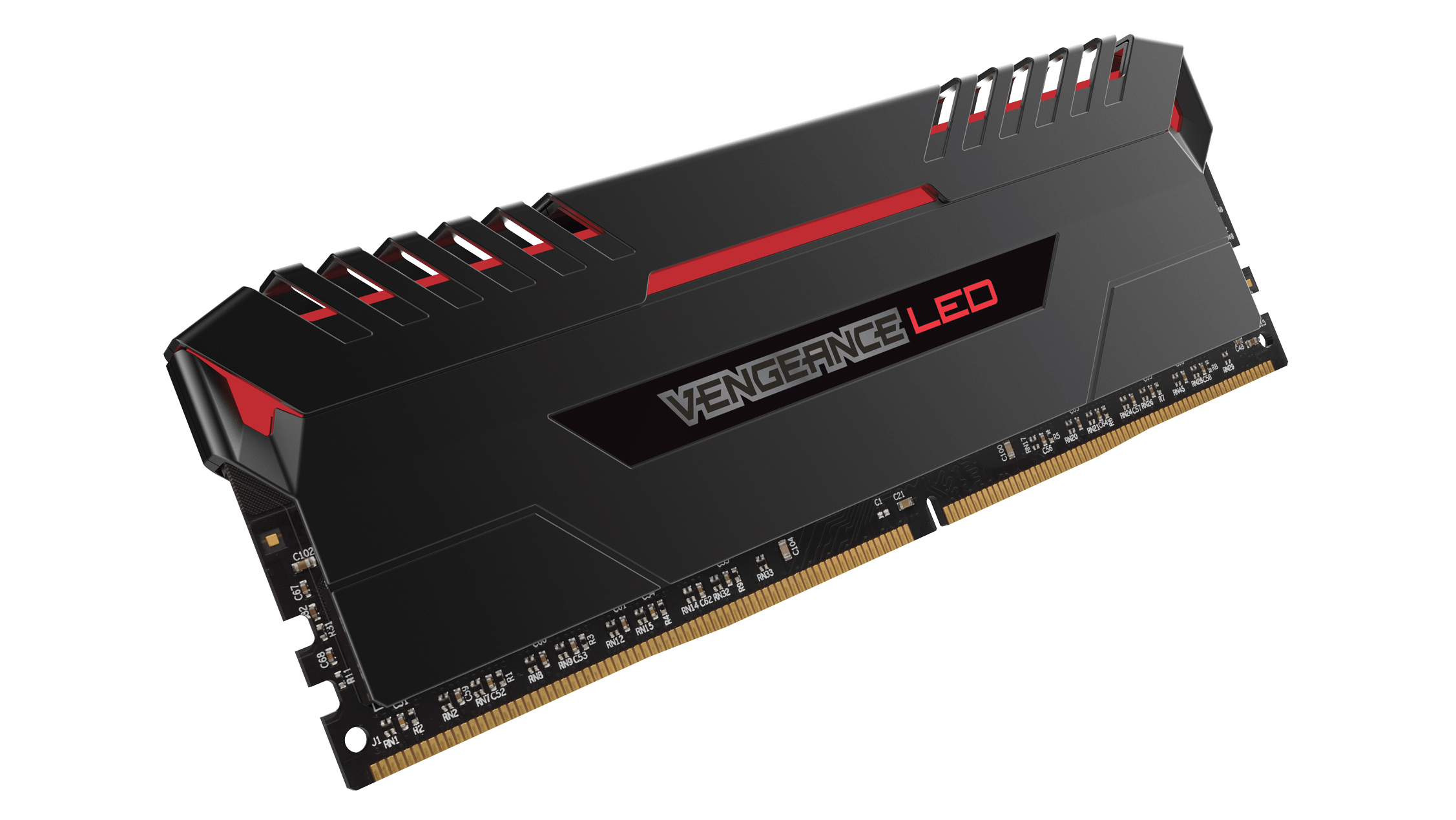
Corsair is one of the most trusted names when it comes to the best RAM on the market. Its Vengeance series, especially, has something for everyone with its LED DDR4 offerings. On top of giving PC builders that extra touch of vibrant lighting, this RAM has robust heat spreaders that maximise cooling for higher overclocking and maximum performance. Corsair’s Vengeance LED DDR4 series also features CL16 latency and whopping 3,466 MHz speeds, so it’s just as fast and responsive as it is aesthetic.
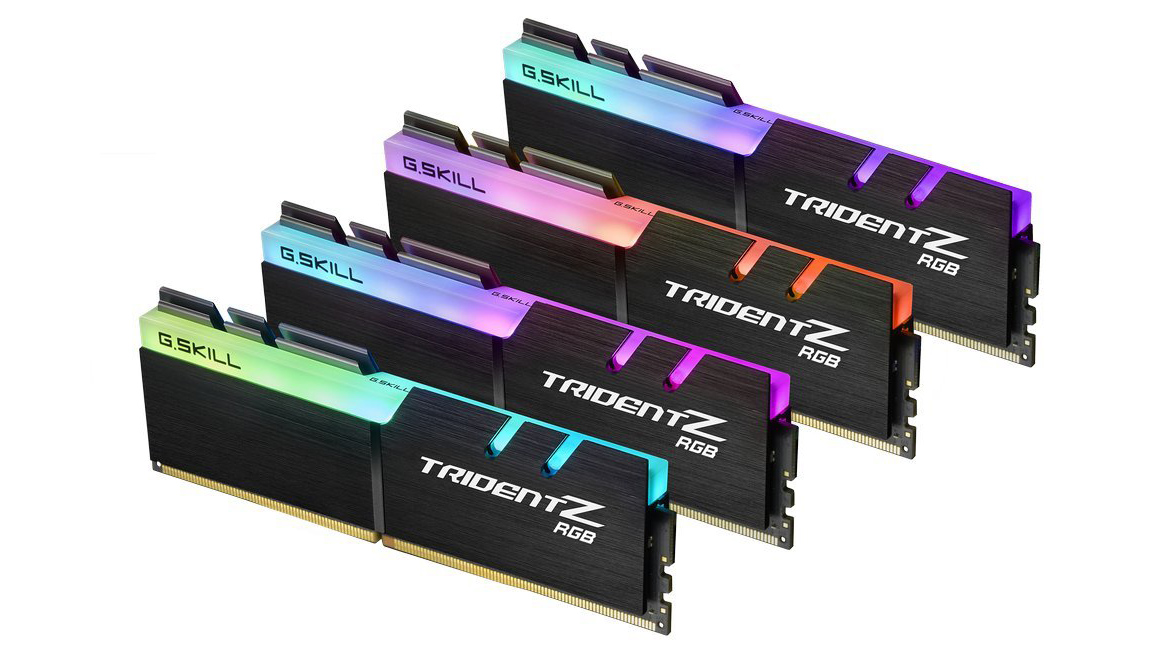
It’s hard to argue with the G. Skill TridentZ RGB as the best RGB RAM. (Image Credit: G.Skill)
At this point, everyone kind of knows about G. Skill and its Trident Z RGB series of RAM. This is some of the best RAM not just because it’s fast, but the top of every DIMM features a full-spectrum rainbow wave light bar that you can use to match your RGB lighting across your entire system. Trident Z RGB DDR4 RAM features CAS latencies between 14 and 19 which is awesome enough, but with speeds up to 4,266, it’s almost perfect. No matter your aesthetic, it’s hard to argue with the G. Skill TridentZ RGB as the best RGB RAM.
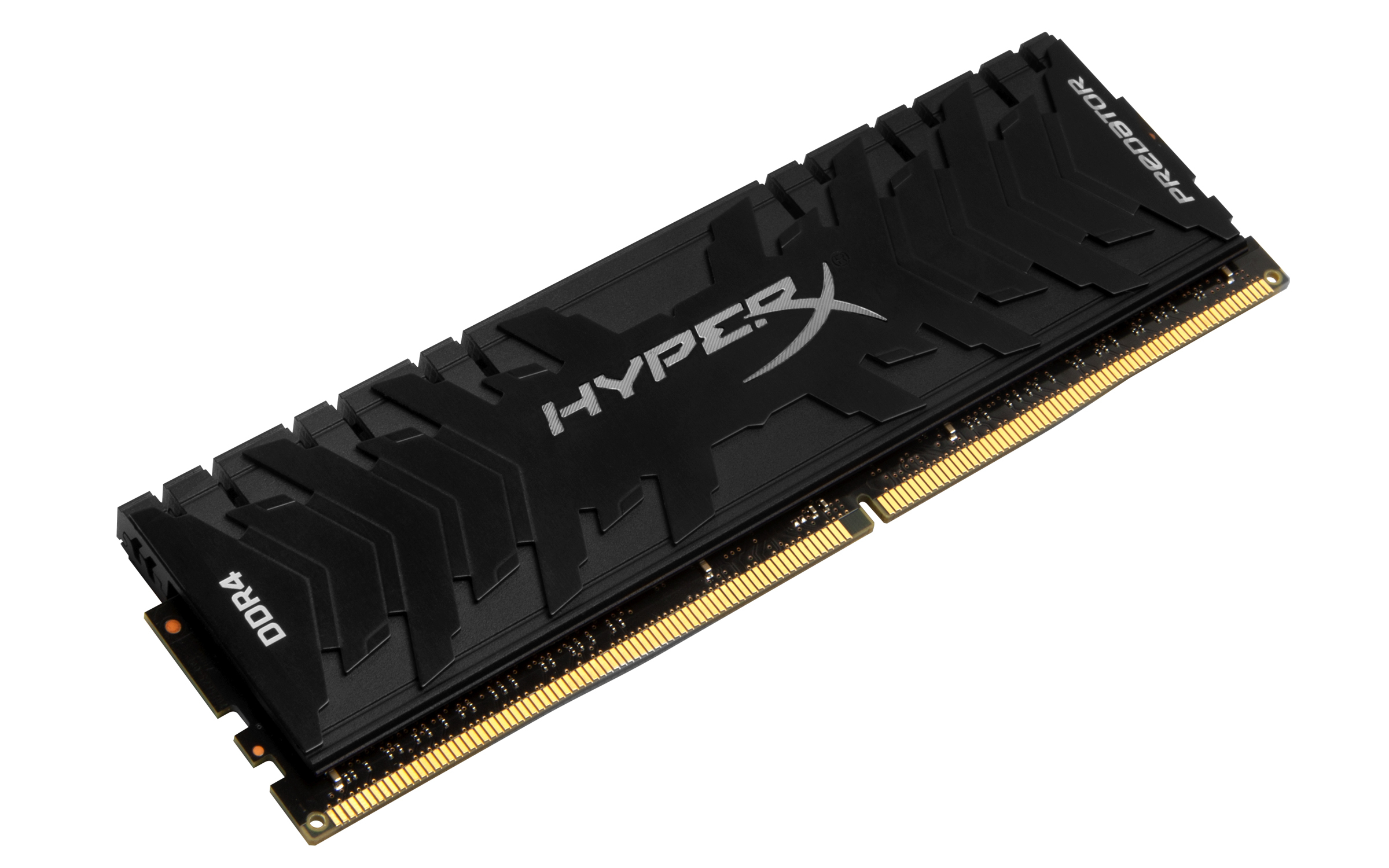
Kingston HyperX Predator is particularly tuned for speed and extreme-performance. (Image Credit: Kingston)
3. Kingston HyperX Predator
Best DDR3 RAM
Type: DDR4 | Capacity: 8GB, 16GB | Speed: up to 4600MHz
Great price
Excellent overclocking potential
RGB doesn't always work
Pricier than others
Kingston’s high-performance HyperX has some of the best DDR3 RAM on the market and the Predator models is particularly tuned for speed and extreme-performance that’s further expandable with XMP profiles. The Predator DDR3 series achieves CL9 to CL11 latencies and speeds between 1866MHz to 2666MHz.
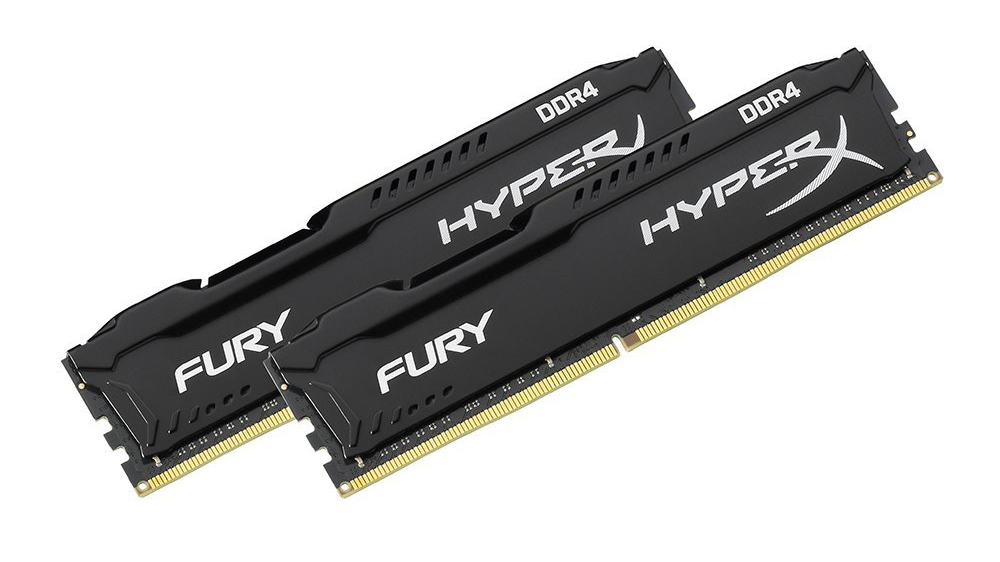
Kingston HyperX Fury can have a huge impact on the performance of your rig. (Image Credit: Kingston)
4. Kingston HyperX Fury
Best budget RAM
Type: DDR4 | Capacity: 4GB, 8GB, 16GB, 32GB | Speed: up to 3733MHz
Affordable at lower speeds
Strong performance
A bit slow
3733MHz speed is pricey
This Kingston HyperX Fury is auto overclocked memory that won’t empty your wallet. This smart DDR3 or DDR4 RAM auto-detects system components to overclock to the highest speeds possible, optimizing performance for all of Intel’s latest chipsets. It comes with latencies between CL14 and CL16, and has speeds between 2,133 and 2,666MHz. While it’s inexpensive, it really can have a huge impact on the performance of your rig.
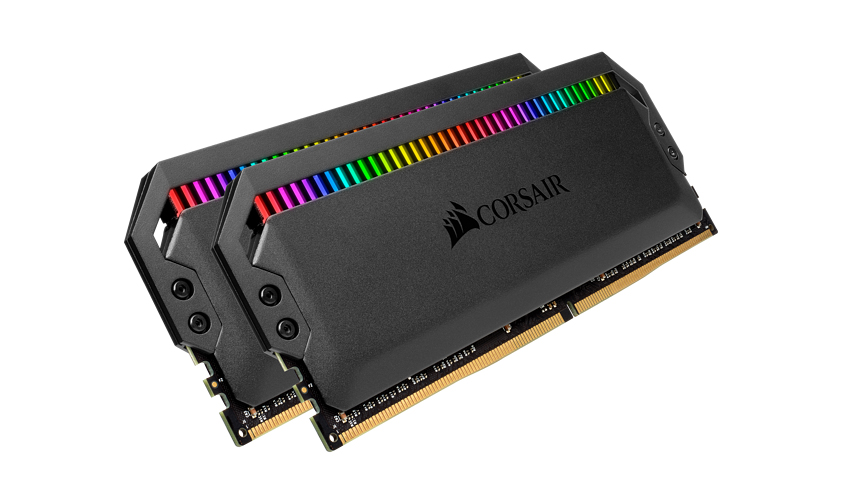
Corsair Dominator Platinum RGB is the best RAM around in 2019. (Image Credit: Corsair)
If you want the best of the best, and you don’t care about pricing, Corsair’s Dominator Platinum memory has always been at the top of the list. However, in 2019, it’s been refreshed to include Corsair’s new Capellix RGB LEDs, leading to a much richer and more colorful design. It’s the same high-end RAM we know and love, with speeds up to 3,600 MHz, but the better RGB make the Corsair Dominator Platinum RGB the best RAM around in 2020.
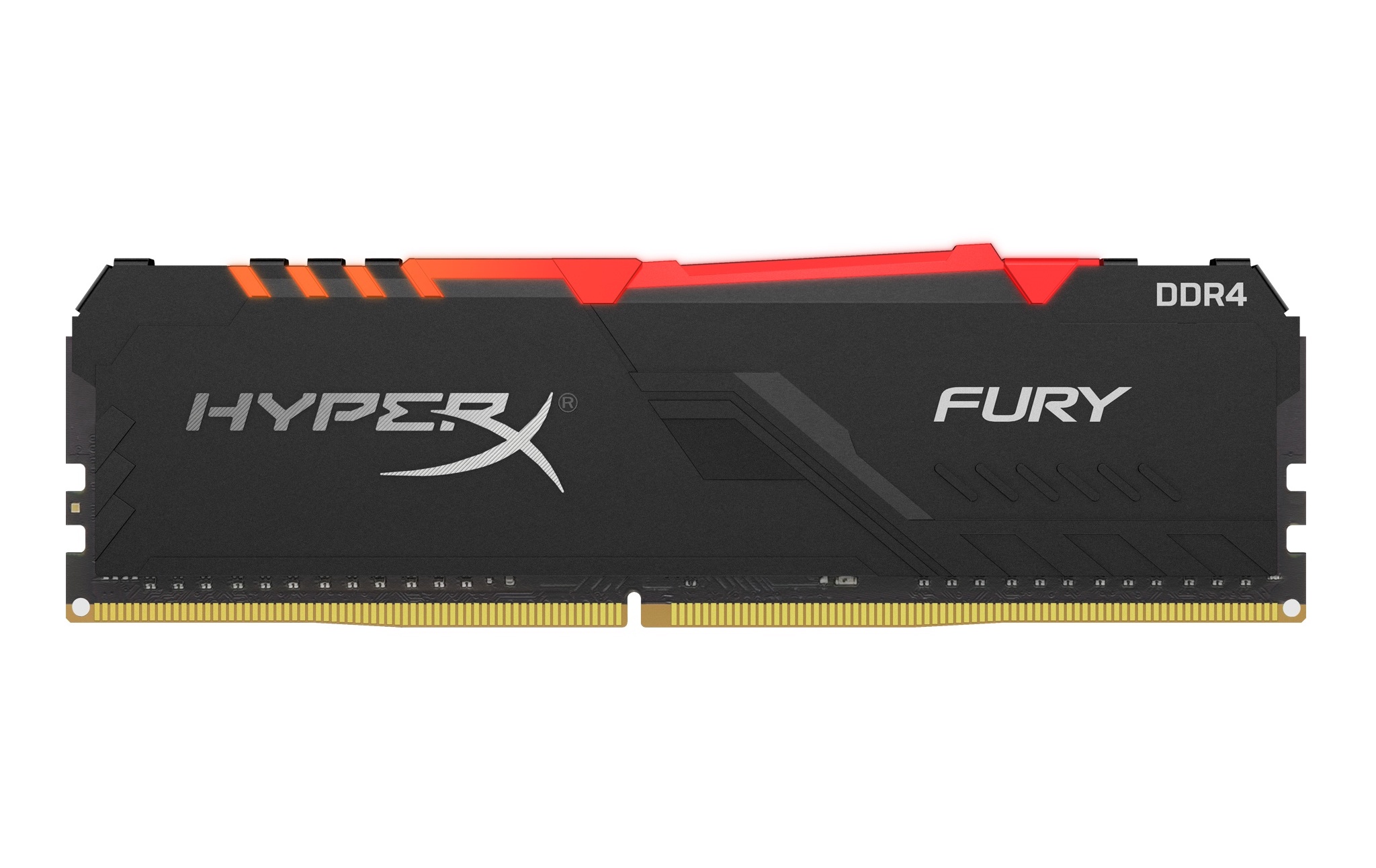
With speeds of up to 3,733MHz and CL15–19 latencies, HyperX Fury RGB 3733MHz is simply fast.(Image credit: HyperX)
6. HyperX Fury RGB 3733MHz
Best high frequency RAM
Type: DDR4 | Capacity: 4GB to 32GB single modules, up to 128GB kit configurations | Speed: 3733MHz
Great RGB
Fast
Choppy RGB lighting
Gigabyte and MSI RGB support doesn't always work
The HyperX Fury RGB 3733MHz is not just pretty with its RGB design. With speeds from 2400MHz to 3,733MHz as well as CL15 to CL19 latencies, it’s just as fast as it is stunning, making it well-deserving of the best high frequency RAM accolade. What’s more is that it’s fitted with predefined Intel Extreme Memory Profiles for maximum performance as well as yperX’s patent-pending infrared sync technology. For an even more immersive gaming experience, you can daisy chain this RAM to sync with multiple other RGB devices. This is some of the best RAM to invest in right now.
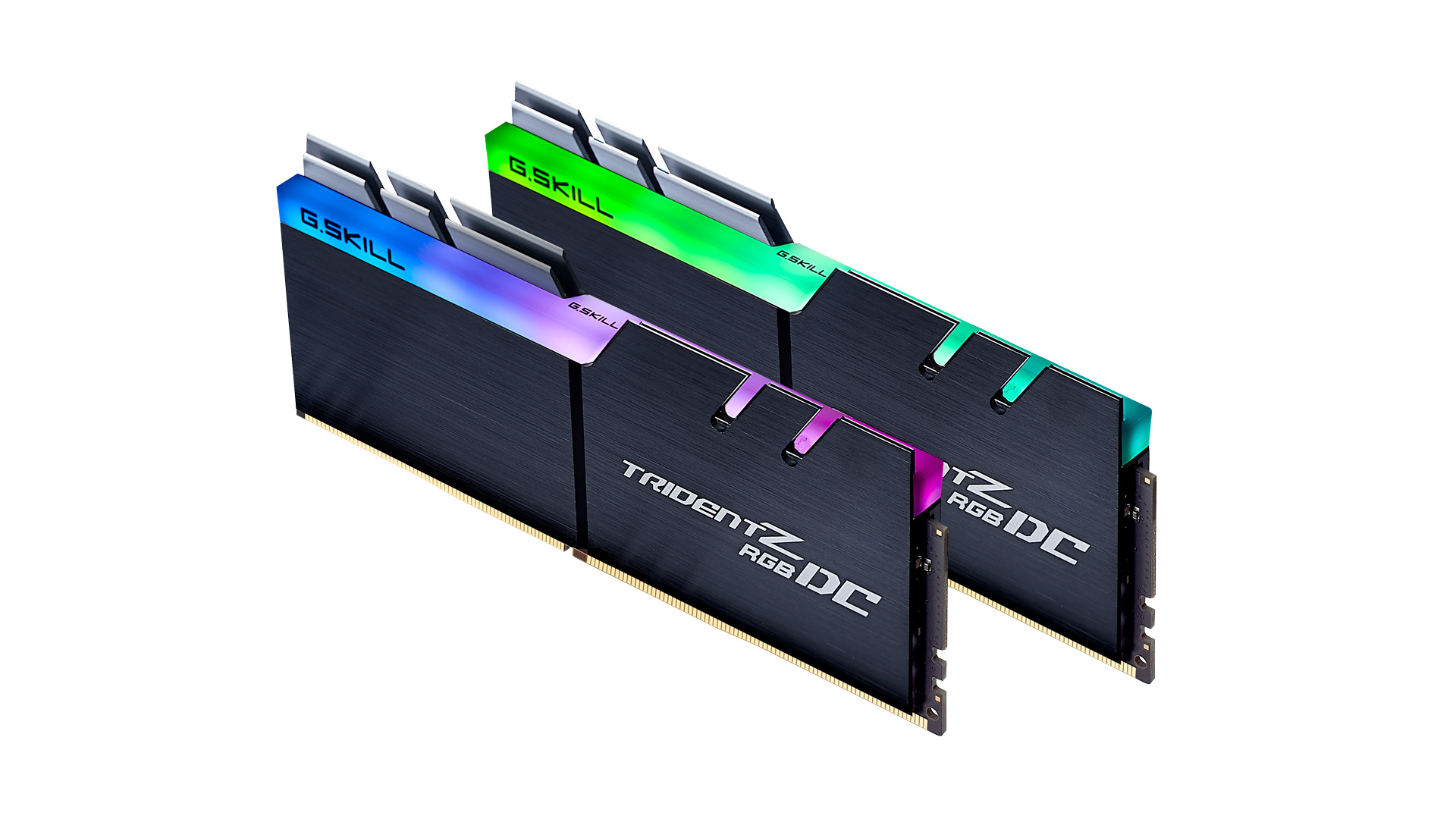
If you need a lot of RAM without taking up too many DIMM slots, G.Skill Trident Z RGB DC is for you. (Image Credit: G.Skill)
Sometimes, especially when you’re looking for the best gaming components, ‘go big or go home’ is the best advice. And, when you want more RAM than you’ll know what to do with, you’re going to want to go with the G.Skill Trident Z RGB DC memory. The DC stands for double capacity, as in, 32GB per stick. Now, this is definitely not the fastest memory in the world, right now it’s only available in up to 3,200 MHz, but if you need a lot of RAM without taking up too many DIMM slots (like if you have a big CPU cooler or a Mini-ITX board), you can’t go wrong with the G.Skill TridentZ RGB DC.
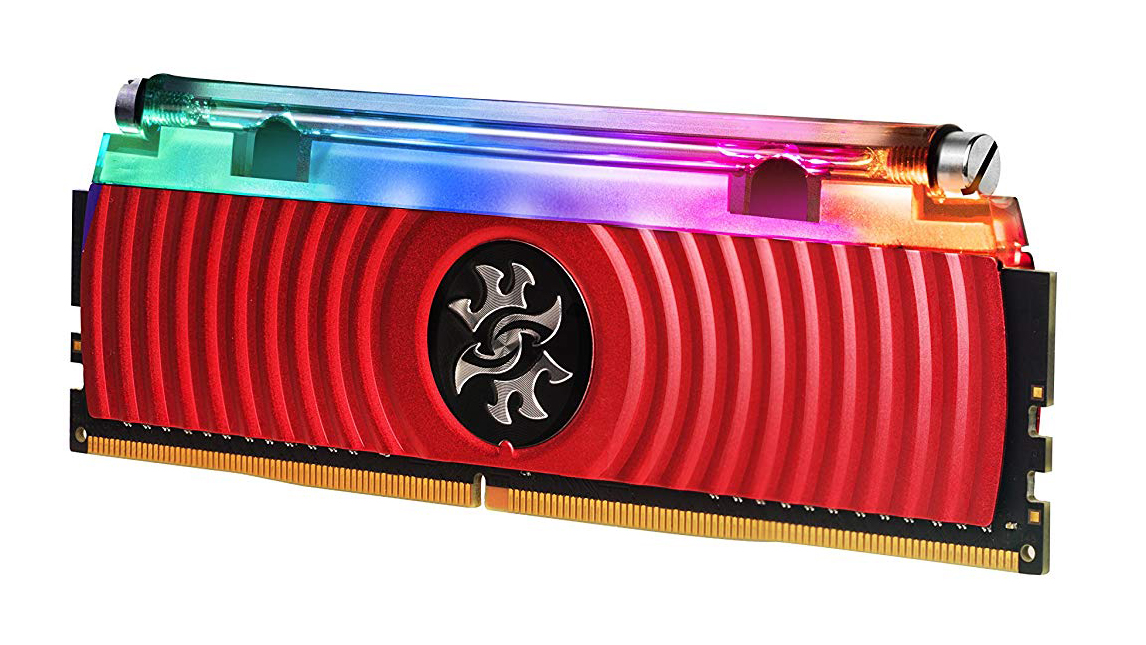
Adata Spectrix D80 is great for your all-out gaming rig. (Image Credit: Adata)
8. Adata Spectrix D80
Best gaming RAM
Type: DDR4 | Capacity: 16GB (2x8GB), 32 (2x16GB) | Speed: up to 4,133MHz
Great looks
Performs very well in four-DIMM configurations
Expensive
Mediocre two-DIMM performance
If you’re building an all-out gaming rig, you’ll want the flashiest hardware on offer – who doesn’t want a gaming rig that lights up the entire room? If this sounds appealing, the Adata Spectrix D80 is the RAM to go for. Not only is it available in frequencies up to 5,000MHz, but it’s also liquid cooled, meaning you don’t have to worry about it overheating. The Adata Spectrix D80 is going to be the best RAM for gaming in an RGB-lit cavern.
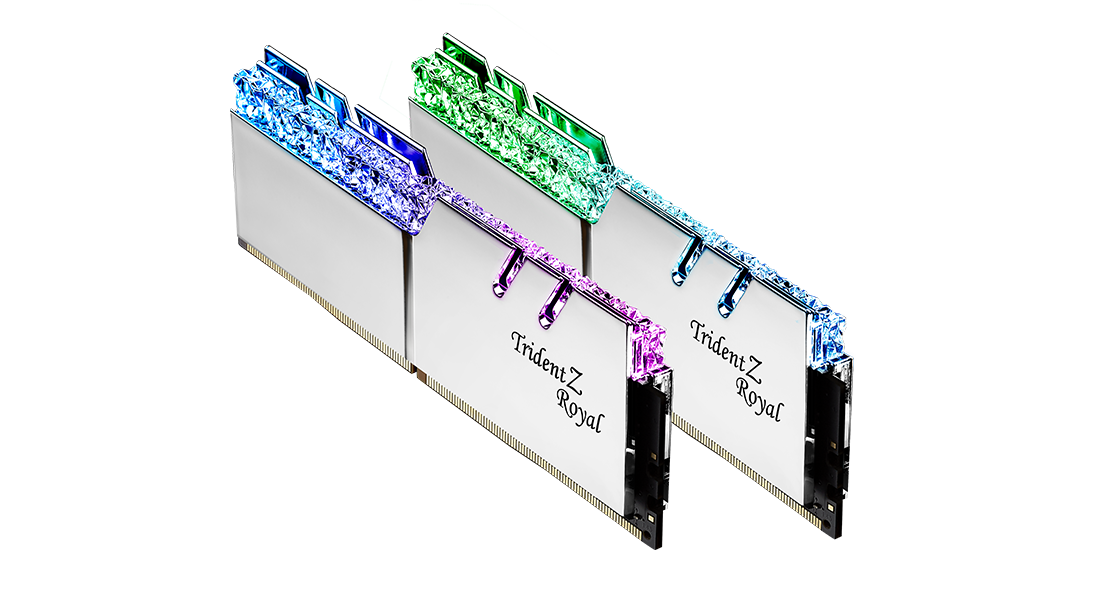
The TridentZ Royal memory gets our vote as the best RGB RAM on the market.(Image credit: G.Skill )
Finding RAM that fits in perfectly with your light up gaming rig is easy with G.Skill. In fact, its TridentZ Royal memory gets our vote as the best RGB RAM on the market right now, thanks to its unique crown jewel design. That means that it’s fitted with a crystalline light bar that basically scatters the eight customizable RGB colors for lighting that dazzles and sparkles. The RAM itself is polished with aluminum heatspreaders of gold or silver colors to keep the whole thing cool. Of course, it’s not all looks – the G.Skill TridentZ Royal also delivers great reliability and performance.
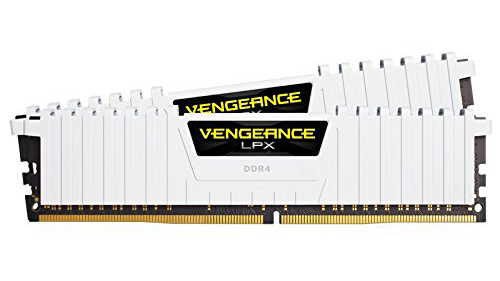
Corsair Vengeance LPX is essential for PC builds with massive CPU coolers. (Image Credit: Corsair)
Corsair’s Vengeance LPX RAM is made for users who want the maximum performance with minimum footprint. This low-profile RAM is essential for PC builds with massive CPU coolers. Despite being so low-profile, they still feature an eight-layer heat spreader to cool while overclocking. While its thin design doesn’t allow for LEDs, but you can get it in three colors: black, red or blue.
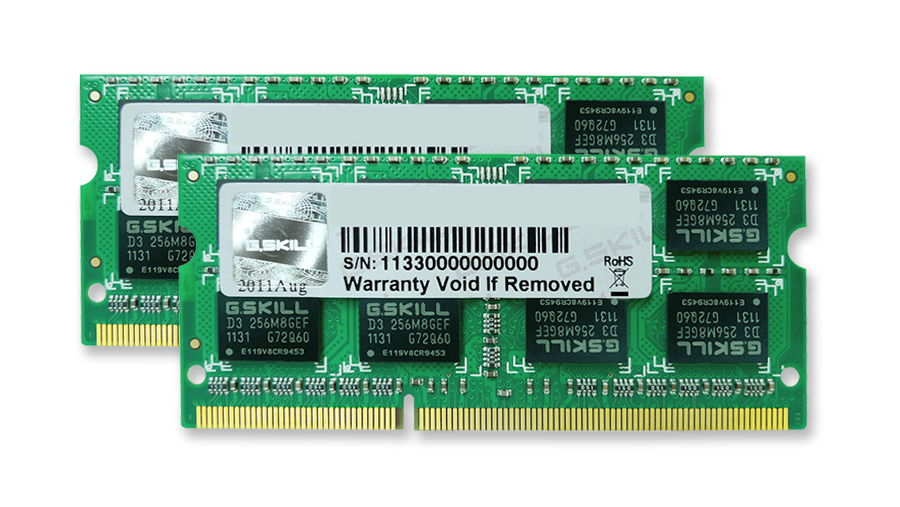
G.Skill Mac RAM has memory upgrades for Macs. (Image Credit: G.Skill)
11. G.Skill Mac RAM
Best Mac RAM
Type: DDR3 | Capacity: 4GB (2x2GB) | Speed: up to 1066MHz
Affordable alternative
Best value
May not be compatible with much older Macs
Slow for power users
G.Skill isn’t just dedicated to laptop and desktop RAM, but it also has memory upgrades for Macs. You see, Apple charges inordinate amounts for RAM upgrades, so going with a third party kit can save a ton of money. Well, as long as your Mac is old enough to still have upgradeable RAM. These SO-DIMM kits have a CAS latency between 9 and 11 and feature speeds between 1,333MHz and 1,600MHz. The best bang for your buck seems to be the G.Skill DDR3-1,333 for Mac.
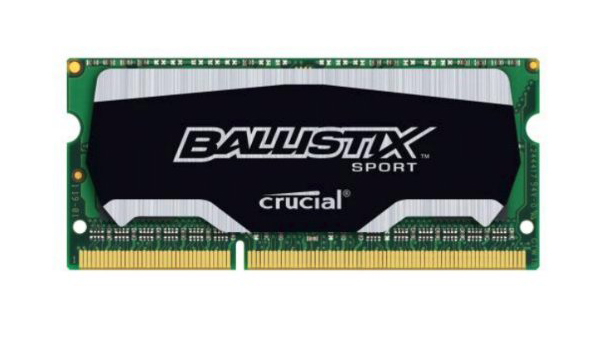
Crucial Ballistix Sport boasts efficient battery life and delivers fast speeds for multi-tasking. (Image Credit: Crucial)
12. Crucial Ballistix Sport
Best laptop RAM
Type: DDR4 | Capacity: 32GB (2x16GB) | Speed: up to 3200 MHz
Low profile
Great value for gaming
Doesn't alway work with AMD Ryzen
Nothing extraordinary
Crucial is by far the best RAM for laptop systems. This manufacturer has designed its Crucial Ballistix Sport SODIMMs for efficient battery life while still delivering fast speeds for multi-tasking. It’s ideal for anyone wanting to speed up the best laptops, and this memory likely offers higher memory speed than anything coming stock in your laptop. Just make sure your laptop actually lets you upgrade the RAM – repairability is falling out of fashion these days.
from TechRadar: computing components news https://ift.tt/36O1WWh
via IFTTT
Retailers like Newegg have been pairing motherboards with highly desirable graphics cards such as the GeForce RTX 3080 and Radeon 6800 XT to such an extent that DigiTimes is reporting a 10-15% fall in global mobo sales. For some, buying these bundles is the only way to purchase a new GPU outside of third-party auction sites (at the risk of buying a scalped product at an insanely inflated price), resulting in unwanted motherboards being cheaply sold on.
It's also likely that everyday gamers and DIY PC builders are not mostly responsible for the oversaturation of discounted motherboards available online. Cryptominers have been widely criticized for buying up GPUs en masse to mine for Bitcoin and Ethereum, and scalpers are known to use bots to buy huge quantities of stock at RRP to later resell for a profit on sites like eBay and Facebook Marketplace.
Both cryptominers and scalpers have no use for the other hardware being paired with elusive GPUs, so it's likely that these 'bulk' purchases have contributed to the vast quantities of discounted motherboards.
I've been advocating a lottery system for high demand PC parts like the #RTX3080, so it is great to see @Newegg finally implement it. But the combo "deals" need to be ditched. Can't build an AMD+Nvidia computer without buying an Intel motherboard. #fail #AMD #Nvidia #Intel pic.twitter.com/HeQjypjWsRJanuary 20, 2021
See more
In-demand graphics cards have been sold in combination with other components for some time, as seen in the above tweet from @RyuGTX that dates back to January 2021. These bundle deals could be an advantage for anyone looking to start their first DIY build, but for anyone simply looking to update an existing rig, it's adding unnecessary costs to an already expensive purchase. Even for folk new to the world of PC gaming, it may be a better financial choice to purchase a gaming laptop or pre-built gaming PC right now.
That said, while the ongoing GPU shortage isn't easy on our wallets, we could also see other components being flogged at a discount due to these bundle sales. NotebookCheck predicts that SSDs and CPUs could also find their way onto sites like eBay given that Cryptominers have no use for them after buying bundle deals.
The current prediction is we will see sales declining on motherboards well into late 2021, and with other essential components expected to be cheaply offloaded into online marketplaces, it might be worth hunting around for some good deals to upgrade your current build. With any luck, GPU stock availability may eventually increase to meet demand before your freshly upgraded system needs another rebuild.
DDR5 RAM is the next step on from current DDR4 modules, and is expected to be supported by Intel’s next-gen Alder Lake processors, which are being readied for launch later this year (albeit later than Q3 according to the most recent rumors – possibly in November).
Corsair’s teaser reminds us that DDR5 modules aren’t just faster than DDR4, but they will also offer greater efficiency, and bigger capacity, with RAM sticks of up to 128GB (those will be seriously expensive, naturally – even small capacity entry-level DDR5 is going to be pricey in its initial incarnations, as is always the way when a new memory standard is introduced).
As to how much faster DDR5 will be, Corsair explains that its next-gen RAM will push bandwidth up to 51GBps (for DDR5-6400 modules – presumably this will be one of the initial launch products), so that’s doubling things up compared to DDR4-3200 at 26GBps.
Corsair observes: “More bandwidth allows for more efficient use of the memory bus in systems with high core count CPUs while the denser capacities will allow your system to tackle even more at once which is great for streaming and content creation (just to name a few applications).”
Further remember that over time, DDR5 memory will be developed and pushed to go even faster. Historically, the initial RAM sticks released early on are always followed by speedier versions down the line – just look at how DDR4 speeds have ramped up over time.
Latency fears
One concern we’ve seen aired on the likes of social media is that DDR5 will suffer in terms of latency, but Corsair tries to put these fears to rest in its primer on the next-gen memory linked from the blog post. The long and short of it is that improvements elsewhere will mitigate any CAS latency increase.
Corsair notes: “With DDR5, individual modules are split into two separate channels by design, allowing for shorter traces that contribute to less latency and higher speeds when it comes to communicating with individual memory ICs on a memory module.”
The firm adds: “Overall single access latency with DDR5 is relatively unchanged, while CAS Latency has increased, the overall latency of a top-tier DDR5 kit will be similar to previous generations of DRAM clocking in at 14-15ns thanks to the improvements we previously mentioned.”
When will the new DDR5 memory modules be arriving? Corsair doesn’t give us any specific launch timeframe, but does say that it will be ‘soon’. As we mentioned at the outset, DDR5 RAM is already expected to be pitching up in the third quarter, and it makes sense that Corsair would be targeting an appearance alongside Intel’s Alder Lake desktop CPUs hitting the market.