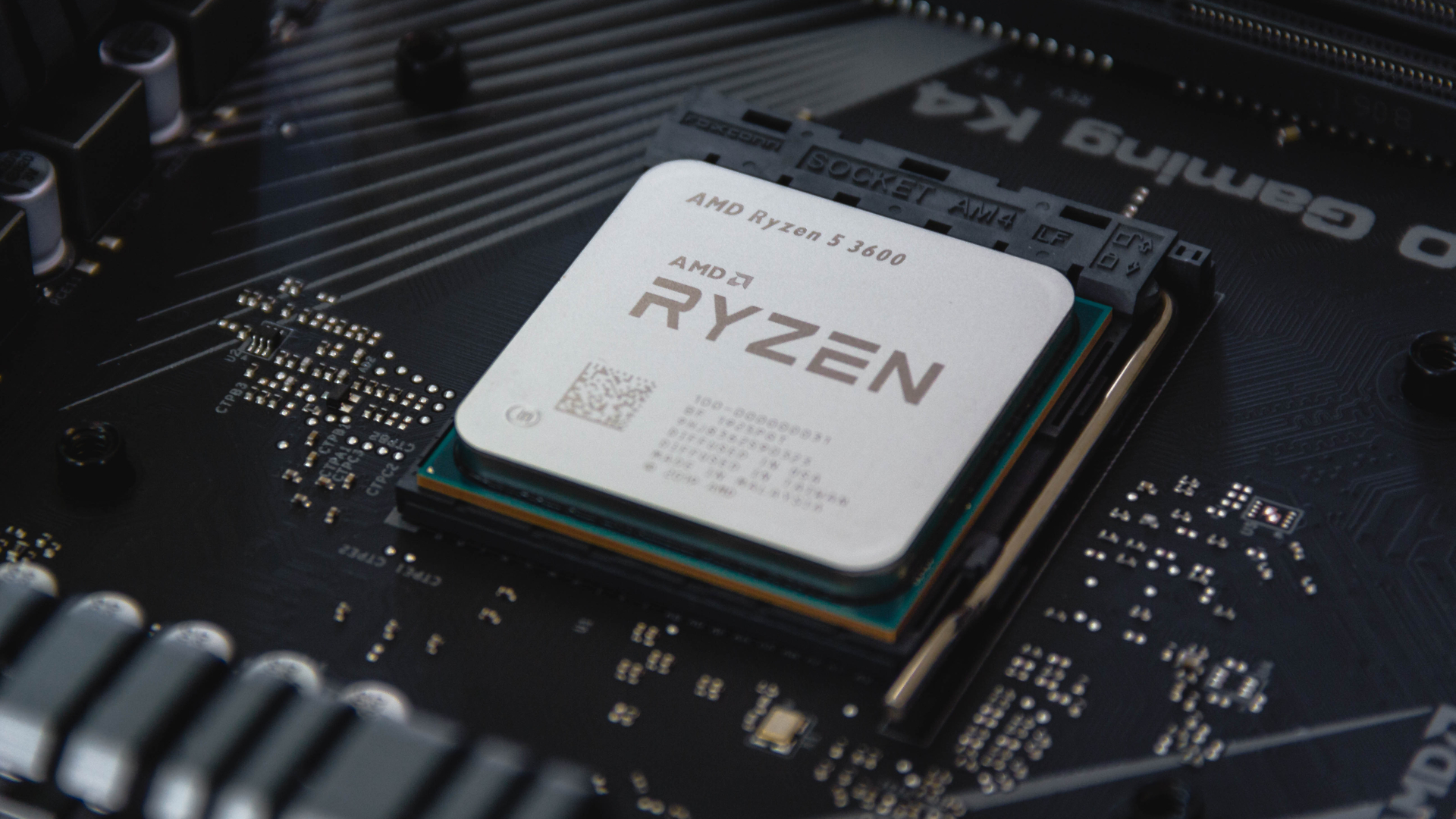
Sometimes choosing a CPU is hard. So we've got you covered. In our CPU Guides, we give you our pick of some of the best processors available, supplying data from our reviews. Our Best CPUs for Gaming guide targets most of the common system-build price points that typically pair a beefy graphics card with a capable processor, with the best models being suitable for streaming and encoding on the fly.
Zotac has been a pioneer in bringing compact small form-factor (SFF) machines to the market right since the ION days. A few years back, they also got into the other expanding PC market segment - gaming systems - using the same SFF approach. With the burgeoning market for compact systems (kickstarted by the success of the Intel NUC initiative), Zotac has grown from strength to strength. The company now has around 8 different mini-PC families targeting different segments. The ZBOX E series caters to the gaming crowd and is marketed under the MAGNUS tag. The company's current flagship is the ZBOX MAGNUS ONE (introduced at the 2021 CES). Coupling a desktop Comet Lake CPU with an nVIDIA Ampere GPU, it promises plenty of gaming prowess. Read on for a detailed look at the performance and value proposition of the top-end ZBOX MAGNUS ONE model - the ZBOX-ECM73070C-W2B.
What could be Intel’s 15th-gen processors, potentially codenamed Arrow Lake, might just offer a vast leap in integrated graphics performance, if fresh leakage is on the money.
Intel’s Arrow Lake could be the 15th-gen range of CPUs to follow 7nm Meteor Lake, or so this latest rumor predicts – and bear in mind that there’s some huge reaching into the future being done here, so a lot can change anyway, even if this is actually Intel’s current plan. (Lunar Lake, which we’ve already heard is believed to be coming after Meteor Lake in previous rumors, will actually follow Arrow Lake, according to these latest bits of spillage anyway).
The theory is Arrow Lake chips will arrive in 2023, and on the desktop they might run with 8-cores at the top-end – just like next-gen Alder Lake – but with a jaw-dropping 32 small cores (low-power ones) backing that up (compared to a max loadout of 8 little cores for Alder Lake). Massive doses of salt here, but this rumor, which comes from YouTube hardware leaker AdoredTV, is not about the desktop chips, but purported mobile CPUs.
Arrow Lake-P (meaning mobile processors for laptops) will supposedly be equipped with up to 6 full-power (normal) ‘Lion Cove’ cores and 8 low-power ‘Skymont’ ones, and certainly looks a good deal less compelling than what might be planned on the desktop at first glance (this is the same top dog configuration as Alder Lake mobile, going by leaks).
However, the interesting bit about the rumor is the claim that Intel will push massively ahead with Arrow Lake’s integrated graphics capabilities on laptops, to the tune of loading up with 320 EUs (Execution Units) for the top GPU.
To put that into perspective, the beefiest current Tiger Lake chip boasts 96 EUs, so Arrow Lake is taking that performance level and more than tripling it. Which sounds seriously impressive (and here – catch! – another bagful of salt).
Analysis: Exciting times for wallet-friendly gaming laptops
Given that Tiger Lake’s integrated graphics can already make a pretty decent job of laptop gaming, and handle some titles at 1080p just fine, if Arrow Lake really is trebling performance as suggested here, it should be clear enough that this generation of mobile chips will be able to cope with the demands of Full HD with ease. We could be looking at an integrated GPU that stands up to contemporary discrete mid-range offerings like the 6700 XT, maybe – but overall performance will, of course, depend on other factors like memory bandwidth.
What this means is that laptops could be capable of some pretty great gaming chops just with an Arrow Lake CPU alone, and no need for adding a discrete GPU – and the demands of space, power usage and cooling the latter brings with it (not to mention the effect on the price tag of the portable).
In short, we should eventually – perhaps in a few years – see more affordable yet truly capable gaming laptops running purely on an Intel chip and its integrated graphics. The main caveat being that this is looking way into the future, and as such it’s even more speculative than a normal rumor.
One of Intel’s Alder Lake processors has seemingly been spotted again, and this model is apparently the Core i7-12700K, going by the specs listed.
As highlighted by hardware leaker @harukaze5719 on Twitter, the processor was discovered lurking in the SiSoftware Sandra database.
Probably i7 12700K- 12C 20T (misreported as 24T)- 8*1.25MB + 4*384KB = 11.5MB L2> L2 cache is reported as 9 core, I think that is right due to 4 small core = 1 cluster. Benchmark could recognize cluster unit. - 8*2.75MB(cut from full of 3MB) + 4*768KB = 25MB L3 https://t.co/fO84Bz2qM3August 9, 2021
See more
While this sample chip isn’t identified in the database entry, based on previous leakage around Alder Lake, assuming this is a genuine CPU and not some kind of fabrication, it’s likely to be the Core i7-12700K – as that’s the processor which is rumored to run with 8 high-power cores and 4 power-efficient ones.
As @harukaze5719 observes, there appears to be an error in reporting the threads, which are listed as 24 – when this should be 20-threads (the 8 performance cores offer multi-threading, for 16-threads, but the low-power cores don’t, so that adds just another 4-threads to make 20 in total).
Another oddity is that the L2 cache is reported for 9-cores, but what seems to be happening here is the 4 low-power cores being recognized as a single cluster – one core – added to the 8 performance cores, as @harukaze5719 clarifies.
Sadly, the clock speeds detailed here – a base clock of 1.2GHz and Turbo to 3.4GHz – are obviously way too low, which is due to this being an early sample chip, with the finished CPU going to run much faster than that, of course.
Remember that the top-tier Core i9-12900K is expected to boost to 5.3GHz according to the word from the CPU grapevine, and the Core i7 shouldn’t be too far off that mark – but take plenty of condiments with all this speculation, naturally.
Analysis: Alder Lake is on track for end of October?
The Alder Lake rumors are starting to flow more regularly now, and the sighting of another sample chip – among a number of other leaks in the past month or so – is yet another morsel of evidence pointing towards Intel staying on track with its launch timeframe for the 12th-generation desktop silicon. (Don't forget that we've also seen reports of pre-release samples already being sold over in China on the black market).
That launch could come as early as October 27, with Intel itself having dropped hints that the Intel ON event, which kicks off on that date in San Francisco, could be the platform for the revelation of Alder Lake. The rumor mill has already put forward this timeframe, and that Alder Lake chips could launch alongside Window 11, with Microsoft making under the hood tweaks to allow Intel’s processors to run better with its revamped operating system.
If this speculated launch timeframe is in the right ballpark, we can expect further sightings of the 12700K – and other Alder Lake products – to pitch up soon enough, with hopefully further insight into the kind of performance we might be looking at when, as will inevitably happen, more leaked benchmarks emerge.
Those following developments with Windows 11 are no doubt familiar with the issues around system requirements and concerns that the revamped OS may not be compatible with any given PC – and it’s good to see one big motherboard manufacturer taking a step to help deal with any confusion.
Asus is busy deploying firmware updates for its motherboards to flick a necessary switch in the BIOS which is key to ensuring that a PC will play nice with Windows 11.
Essentially, what Asus is doing is enabling TPM 2.0 which is a requirement for running Windows 11. Of course, it most certainly wasn’t for Windows 10, and this move with Windows 11 is Microsoft taking a step to ensure better security. TPM or Trusted Platform Module is essentially a little security chip, present on the motherboard or built into the CPU itself.
Confusion reigned when Windows 11 was first unveiled and Microsoft’s PC Health Check tool (which was swiftly pulled) was telling a lot of folks that their machine wasn’t compatible with the OS – when in fact it was, but the TPM function simply had to be turned on in the BIOS (users weren’t told that, though).
The tricky part, of course, is that while the more tech-savvy folks out there won’t have a problem with nipping into the BIOS and switching on TPM, it’s a more intimidating task – and potentially a tad confusing – for those who are relative PC novices.
Hence Asus is pushing out this new firmware update which automatically flips this TPM switch for folks, so they don’t need to worry about actually having to take a trip into the BIOS themselves.
A whole range of Asus motherboards will see their firmware updated to this end, so all users have to do is download and apply the latest firmware to get TPM 2.0 enabled. Loads of Asus boards already have the update ready to go, and you can check if yours is one of them here. Do note that some of the firmware updates are still in testing, though – but it’s not as if there is a massive rush, given that Windows 11 isn’t due out for a few months yet.
Analysis: Thumbs up for Asus
This is a laudable move from Asus, and anything that can help cut through the confusion on the topic of Windows 11 compatibility is certainly very welcome. As we mentioned, for relative beginners in the world of PCs, the BIOS can be a very intimidating place full of complex looking menus, odd acronyms, and some settings that shouldn’t be played with unless you know what you’re doing.
It’s definitely a good thing that these kind of folks aren’t forced to make this change in the BIOS themselves, and we’ll doubtless see other motherboard makers follow in the footsteps of Asus here.
However, there is another point to bear in mind, which we discuss here, and that’s the need for Secure Boot as a Windows 11 requirement along with TPM. Secure Boot is, as the name suggests, another security feature which toughens up the boot process to defend against potential exploits, and again it’s something you’ll need to travel into the BIOS to turn on (if it isn’t already on).
Intel’s Alder Lake processors will be more power-hungry than their Rocket Lake predecessors, if the latest from the rumor mill is to be believed.
Chuck plenty of salt around with this one, for sure, but as uncovered by Tom’s Hardware, Chinese tech outfit FCPOWERUP, which majors in power supplies – and has leaked correct info in the past – has claimed (on Weibo) to have obtained Intel’s power requirements for its 12th-gen CPUs.
The info, which is seemingly drawn from Intel specs meant for power supply manufacturers, shows that Alder Lake chips will run with base TDPs of 125W, 65W and 35W, and they’ll mirror the continuous current requirements of Rocket Lake processors (and indeed Comet Lake before that).
Where Alder Lake ups its demands, however, is in peak current, and the tiny spikes that can occur momentarily with a chip. If these specs are correct, Alder Lake will raise these demands by as much as 28% in the 65W bracket, 24% with 35W silicon, and 15% with the top-tier 125W CPUs.
However, remember that this is peak demand. While this gets into pretty techie PSU territory, we’re talking about ‘PL4’ power draw, or the absolute peak output supplied by the 12V2 power rail to the processor for an exceptionally brief time (a matter of milliseconds). This is very different to the continuous current demands: you may have heard of the ‘PL2’ spec of a CPU, which is the maximum continuous power draw – albeit for a short period itself, but a number of seconds, not just a mere fleeting millisecond spike – that the processor can run flat-out at top Turbo speeds.
What does this mean for the average PC owner looking at an upgrade to Alder Lake, then? FCPOWERUP floats the tentative piece of speculation that consumers could be looking to budget around 50W to 100W more in terms of their PSU’s headroom compared to current Rocket Lake (or Comet Lake) chips, with the exact amount obviously depending on how far up Intel’s CPU range they’re wanting to go (as ever, the more powerful processors need more wattage).
Analysis: Watt on earth’s going on here then?
Before you start pulling your hair out regarding the possible need to upgrade your power supply to be ready for Alder Lake, let’s underline a few things here. These are tiny spikes of micro-usage as noted, and that figure of 50W to 100W extra above Rocket Lake is mere speculation based on an unproved (and possibly fabricated – or if it is real, maybe outdated) piece of Intel documentation.
We don’t know the truth behind it, and we definitely shouldn’t be drawing any conclusions on the power demands of Intel’s 12th-gen processors at this point, not until we’ve heard from Team Blue itself on the matter.
Indeed, we’d expect that Intel would surely be cautious around introducing a new range of silicon that required a number of users to be looking at a PSU upgrade (as obviously folks buying an Alder Lake processor in the future will also need a new motherboard with an entirely different socket, as we already know).
What does introduce an element of confusion is that as Tom’s points out, there could be issues with older multi-rail power supplies which have a 12V rail with a 20A output limit – and that could be problematic (if the above info is correct, of course).
All of this is just speculation at this point, but the hints coming from the rumor mill certainly suggest that if you’re getting a new PC, you should be sure to pick a PSU with plenty of headroom for wattage. That’s always been good advice really, though, to ensure your PC runs comfortably and stably, plus it gives you plenty of scope to upgrade to more powerful components in the future.
In a recent interview, AMD appears to dismiss the threat of Apple’s M1 chip, but underestimating Apple could be a costly mistake.
As you may recall, back in 2020, Apple stopped using Intel processors in its new MacBooks and Macs, and instead created its own M1 chip, that combines processor and graphics, and which is based on ARM architecture.
The move was – in our view – a big success. The new M1-toting MacBook Air, MacBook Pro 13-inch, Mac mini and iMac all impressed us with their performance – easily rivalling or outperforming previous devices running on Intel hardware. This was especially true when it came to battery life, with the MacBook Pro 13-inch (M1, 2020) offering the longest battery life ever seen in a MacBook.
It also gave Apple almost complete control over the hardware in its devices, rather than having to rely on third parties like Intel. And, as everyone knows, Apple likes complete control.
By losing such a big customer as Apple, this move also hit Intel hard – but what about other chip makers?
AMD shrugs off the challenge
In a chat with The Indian Express, AMD's CVP of Product Management and Marketing, David McAfee, insists that the company has “a very competitive roadmap against what Apple is doing.” Not only that, but that “I don’t think that what Apple has done changes AMD’s strategy dramatically.”
This is a rather dismissive attitude regarding the threat that Apple’s M1 chip poses to AMD. While AMD didn’t make CPUs for Apple products, critically-acclaimed M1 MacBooks could tempt people away from buying an AMD-powered laptop, for example.
However, while the Apple M1 chip uses integrated graphics that can’t rival AMD Radeon Pro dedicated graphics, rumors abound that the successor to the M1 chip, or even a more powerful ‘M1X’ variant for Pro devices, could come with much more powerful graphical capabilities. If that’s the case, the AMD/Apple partnership could be at risk.
(Image credit: Christian Wiediger/Shutterstock)
So, Apple offers a threat to AMD that may not be immediately obvious, and AMD would be foolish to ignore this. To be fair, McAfee does hint at why AMD doesn’t feel too threatened at the moment, explaining that “what Apple has done is that they have taken a different approach to design a chip… [with a] strong, single-threaded CPU performance that is right there with the Zen 3 series processor.”
And, while the M1 chip is aimed at Apple devices only, AMD’s partnerships with Microsoft and Google on laptops, PCs and Chromebooks offers the company “an enormous amount of opportunity.”
McAfee also praised the M1 chip: “I would say the biggest innovation Apple has brought into the ecosystem is the battery life and power efficiency that comes from the heritage of the mobile handset space and kind of taking it into the PC space.”
This refers to the fact that while the M1 is Apple’s first chip for desktop and laptop PCs, it’s been making its own chips for its iPhones and iPads for many years now, and that experience has certainly paid off.
Even if AMD doesn’t view the M1 chip as a threat at the moment, we think the added competition is nothing but a good thing for consumers. For too long, Intel dominated the processor market, but now AMD is snapping at its heels, and that has forced Intel to become more innovative in response. If Apple’s M1 chip can challenge these two established titans of the CPU world, things could get even more interesting.