Just over a month ago Intel pulled the trigger on the rest of its 12th generation "Alder Lake" Core desktop processors, adding no fewer than 22 new chips. This significantly fleshed out the Alder Lake family, adding in the mid-range and low-end chips that weren't part of Intel's original, high-end focused launch. Combined with the launch of the rest of the 600 series chipsets, this finally opened the door to building cheaper and lower-powered Alder Lake systems.
Diving right in, today we're taking a look at Intel's Core i3-12300 processor, the most powerful of the new I3s. Like the entire Alder Lake i3 series, the i3-12300 features four P-cores, and is aimed to compete in the entry-level and budget desktop market. With prices being driven higher on many components and AMD's high-value offerings dominating the lower end of the market, it's time to see if Intel can compete in the budget desktop market and offer value in a segment that currently needs it.
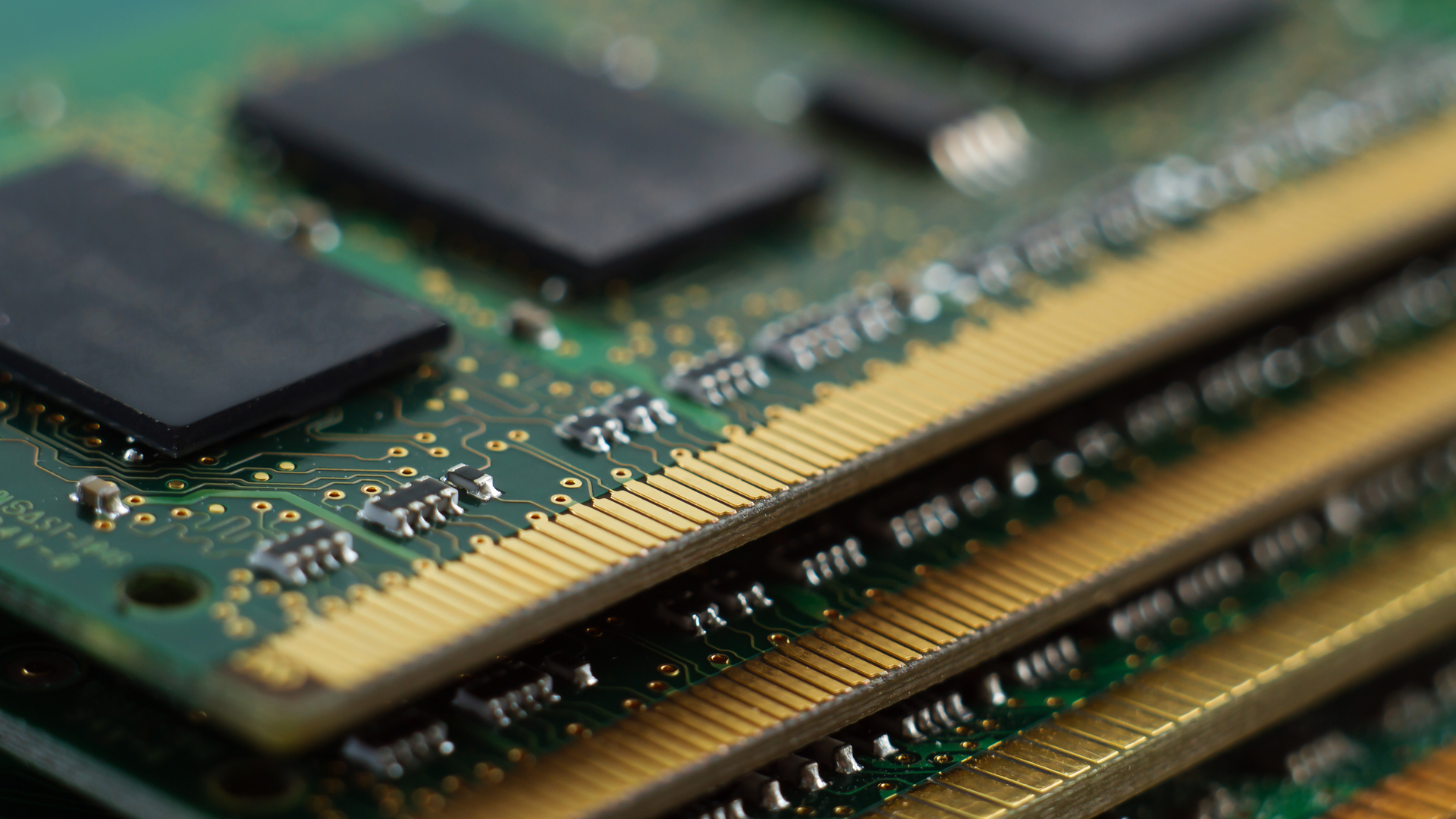
New reports suggest that Intel may be pushing manufacturers to only support DDR5 memory with 700 series motherboards, which are expected to release later this year alongside Intel’s 13th gen Raptor Lake processors.
If these rumors, which were first reported on by TechPowerUp, are correct, then this could be a blow to people who were hoping to build a budget PC, as DDR5 RAM prices are still incredibly high.
Intel’s Raptor Lake processors will ship in Q3 of 2022 with support for both DDR5 and the older DDR4 RAM. With DDR5 being both expensive and quite hard to get hold of, including DDR4 support should make the upgrade easier for a lot of people.
If you have a current-gen series 600 motherboard, you’ll be able to switch to the 13th generation Raptor Lake processors when they launch and still use your DDR4 RAM after a BIOS update.
This will make upgrading to Raptor Lake processors a lot more affordable for many people, as they’ll only have to buy the new processor. However, if you’re building or buying a PC from scratch, and want to use the new 700 series motherboards, then it looks like you may have to also buy new DDR5 RAM, and that could seriously jack up the price.
Why?
While the push to only support DDR5 RAM on new motherboards may seem counterintuitive – as DDR4 support is one of key features of Raptor Lake for upgraders – there is some logic to this move (assuming this isn’t just a rumor, of course).
DDR5 offers a lot of benefits over DDR4, including vastly increased speeds, so any PC that uses DDR5 is going to perform much better. By going DDR5-only for 700 series motherboards, manufacturers will be able to concentrate on getting the absolute best performance out of the new memory, and pushing speeds higher than ever.
This could also help the adoption of DDR5 when it comes more readily available. With AMD Zen 4 CPUs also expected to launch later this year, and which are also said to support DDR5, the new RAM has a chance of becoming more mainstream. However, there’s quite a big issue it needs to overcome…
Analysis: Bad news for budget PCs
(Image credit: Shutterstock)
The move to DDR5 RAM is certainly welcome for people who want the best possible speeds, and are happy to pay for it. However, this may cause an issue for people who were hoping to build or buy a budget PC, as DDR5 remains very expensive.
Hopefully, DDR5 prices will start dropping. It may take a while, but if and when they hit DDR4 prices, mainstream adoption will likely dramatically increase.
Until then, if you’re looking to build or buy a budget PC, you may have to stick with previous generation parts for now. The fact that Raptor Lake will support DDR4 and can be used in older motherboards for 12th generation Alder Lake is also welcome, and a nice example of Intel following its rival AMD’s lead, as AMD CPUs are often backward compatible with previous-generation motherboards, taking the financial sting out of upgrading.
Not everyone wants, needs or can afford cutting-edge high-end PCs, so we really hope that this new push doesn’t spell the end for budget alternatives.
If there has been one prominent, industry-wide trend in chip design over the past half-decade or so, it has been the growing use of chiplets. The tiny dies have become an increasingly common feature as chip makers look to them to address everything from chip manufacturing costs to the overall scalability of a design. Be it simply splitting up a formerly monolithic CPU in to a few pieces, or going to the extreme with 47 chiplets on a single package, chiplets are already playing a big part in chip design today, and chip makers have made it clear that it’s only going to grow in the future.
In the meantime, after over 5 years of serious, high-volume use, chiplets and the technologies underpinning them seem to finally be reaching an inflection point in terms of design. Chip makers have developed a much better idea of what chiplets are (and are not) good for, packaging suppliers have refined their ultra-precise methods needed to place chiplets, and engineering teams have ironed out the communications protocols used to have chiplets talk amongst each other. In short, chiplets are no longer experimental designs that need to be proven, but instead have become proven designs that chip makers can rely on. And with that increasing reliance on chiplet technology comes the need for design roadmaps and stability – the need for design standards.
To that end, today Intel, AMD, Arm, and all three leading-edge foundries are coming together to announce that they are forming a new and open standard for chiplet interconnects, which is aptly being named Universal Chiplet Interconnect Express, or UCIe. Taking significant inspiration from the very successful PCI-Express playbook, with UCIe the involved firms are creating a standard for connecting chiplets, with the goal of having a single set of standards that not only simplify the process for all involved, but lead the way towards full interoperability between chiplets from different manufacturers, allowing chips to mix-and-match chiplets as chip makers see fit. In other words, to make a complete and compatible ecosystem out of chiplets, much like today’s ecosystem for PCIe-based expansion cards.
AMD’s Ryzen 7 5800X3D processor, the incoming model sporting 3D V-cache tech, is set to go on sale at the end of March, going by the grapevine.
This comes from well-known rumor peddler Greymon55, who said on Twitter that the CPU is “probably” going to be on shelves by the end of the month.
58X3D has been shipped and will probably be on the market by the end of this month.March 1, 2022
See more
In a follow-up tweet, Greymon dropped a further nugget of info about the price of the 5800X3D, which they have heard will be around the $350 mark in the US (about £260 or AU$480, but remember that a direct currency conversion is pretty meaningless as a reflection of what the actual price will be in other regions). However, also note that the leaker added that they weren’t so sure on pricing as the release date.
Naturally, all of the above needs to be taken with the usual condiments we should employ when dealing with speculation from inside sources in the tech world.
Analysis: Does that price seem realistic?
AMD has previously mentioned a spring launch for the Ryzen 7 5800X3D when the CPU was revealed at CES back at the start of 2022, so we were hoping to see it soon, and this rumor obviously fits in that respect.
The end of March makes sense, then, but the pricing of $350 may be at the optimistic end of the speculation spectrum here. We say that because the vanilla Ryzen 7 5800X is still priced with that tag, or thereabouts, at several major US retailers, although that said, Micro Center has dropped the 5800X to $300.
So, that could leave room for the new 3D spin on the chip to come in at $350 with other retailers perhaps set to follow Micro Center’s lead with the price of the standard 5800X. In theory, anyway, but we do wonder if the 5800X3D isn’t going to carry more of a premium when it first emerges, given that it’s positioned as a CPU which outperforms Intel’s top dog 12900K, an entirely more pricey proposition (currently $500 at Micro Center).
Furthermore, we’ve also heard a rumor that AMD may struggle to produce much volume of the 5800X3D, at least initially – which is not exactly an outlandish sounding theory given component shortages, balanced with Team Red’s need to prioritize the production of server processors at the high-end (Epyc chips have bigger profit margins).
On balance, we’d be inclined to guess at a $400 launch price for the Ryzen 7 5800X3D, or certainly more towards that mark than $350. Naturally, if the chip does turn out to be rather short in supply to begin with, any recommended pricing will be kind of moot as the scalpers come out in force and we have the usual farce of seriously inflated pricing on processors being resold.
The 5800X3D is essentially a stopgap model to fight in Team Red’s corner against Alder Lake, until Zen 4 CPUs arrive later in 2022 (by which time, mind, those chips might be up against Intel’s next-generation, Raptor Lake). However, the latest buzz on the Ryzen 7000 launch timeframe is that AMD is stepping it up, perhaps to Q3, in order to achieve better positioning against Raptor Lake and maybe beat Intel to the next-gen punch.
Earlier this year, AMD announced an update to its mobile processor line that we weren’t expecting quite so soon. The company updated its Ryzen 5000 Mobile processors, which are based around Zen3 and Vega cores, to Ryzen 6000 Mobile, which use Zen3+ and RDNA2 cores. The jump from Vega to RDNA2 on the graphics side was an element we had been expecting at some point, but the emergence of a Zen3+ core was very intriguing. AMD gave us a small pre-brief, saying that the core is very similar to Zen3, but with ~50 new power management features and techniques inside. With the first laptops based on these chips now shipping, we were sent one of the flagship models for a quick test.
More known for its custom water cooling components, Bitspower has released its first-ever air-based CPU cooler, the Phantom. Designed for the entry-level market, the Phantom includes a single 120 mm RGB enabled cooling fan and supports Intel's latest LGA1700 desktop socket and AMD's AM4 socket.
With a height of 158 mm, the Phantom is compatible with most desktop cases. It is constructed of aluminum, with four copper heat pipes attaching the large aluminum fin stack to the cold plate. To aid in heat dissipation, it uses a single 120 mm cooling fan which includes RGB for users looking to add a bit of flair to their system. The cooling fan included has a maximum speed of 1800 RPM, which Bitspower claims the fan has an airflow rating of 80 CFM, and it operates with a maximum volume of 34 dBA.
The Bitspower Phantom CPU Cooler is installed onto a mini-ITX motherboard.
Despite the official listing on the Bitspower website not providing much information on specification and capability, I reached out to Bitspower CEO Vincent Yu and confirmed what the webpage leaves out. This includes the official dimensions of the Bitspower Phantom CPU cooler, which has a relatively small footprint of 116 x 51 x 158 mn. Vincent Yu also confirmed that the Bitspower Phantom could dissipate heat from most desktop processors, with a rated TDP of 200 W.
The Bitspower Phantom air cooler is available directly from its website for 1450 TWD. Still, Bitspower has confirmed to me that it will be available in other regions soon with an expected MSRP of $55.
Intel is making serious headway in the desktop CPU market, going by some fresh evidence from two separate sources.
As VideoCardz highlights, these are stats pertaining to buyers of standalone desktop CPUs in Japan, and also the breakdown of processor share obtained from PassMark (the popular benchmarking software).
Let’s start with PassMark, which compiles stats based on the systems using its benchmarking tools, and in the CPU category, has found that in recent times, Intel has been surging upwards.
To be precise, in Q3 and Q4 of last year, Intel’s share of CPUs has increased from around 50% to almost 60%, a pretty big swing in Team Blue’s favor for the second half of 2021, as PassMark pointed out on Twitter.
Note that those stats are for all desktop PCs, of course, whereas the second batch of figures is for DIY sales only (standalone CPUs, not prebuilt machines), and comes from Japan.
Going by the analysis of the Japanese market as carried out by BCNR, Intel desktop processor sales have been on the rise since mid-2021 (again), with sales of Core i5 CPUs booming in particular, and also Core i7 models up fairly strongly, with a marked decline in AMD’s sales powerhouse which is Ryzen 5 chips.
Earlier in 2020, Ryzen 5 sales in Japan crested over 40% market share (briefly), but have since sunk to just 12.6% of the market in January 2022, with Core i5 processors from Intel surging to 35.7% in the same month (and Core i7 hitting 25%).
Analysis: Is AMD set to stagnate further near-term, losing more share to Intel?
Both these sets of figures show that from mid-2021 – or actually, slightly earlier than that in Japan – Intel has witnessed a marked increase in CPU market share. Of course, even two separate sources are hardly representative of the whole desktop processor market (remember, the Japan stats apply to standalone or DIY sales only), but we have seen Intel making progress elsewhere.
For example, German retailer MindFactory showed Intel hitting a 30% CPU share in November 2021, the highest level seen all year (previously, Team Blue had only managed to secure a 25% share at best for CPU sales from this retail outlet). Alder Lake certainly made a difference in those figures, and is no doubt at least part of the reason for the gains seen in the two reports we talked about above – the new hybrid tech-toting processors have been well-received on the whole.
AMD may also have been slipping due to its own issues with supply and production of processors, and the lack of any fresh Ryzen blood for a good long time now. All we’ve had is a reveal of the Ryzen 7 5800X3D as a stopgap chip, and rumor has it that even this single processor could be very thin on the ground when it launches (we’re not even sure when that’ll be, either).
The danger for AMD is that it just stagnates and Intel carves even further into its desktop CPU territory. And to top all this off, there’s the threat of Intel getting next-gen Raptor Lake chips out in good time later this year – maybe in September, and potentially before AMD’s Zen 4 CPUs arrive, which would be even more damaging for Team Red’s sales. No wonder some other speculation holds that AMD is really trying to ramp up the launch schedule for Zen 4.