Wednesday, 29 November 2023

Amazon Unveils Graviton4: A 96-Core ARM CPU with 536.7 GBps Memory Bandwidth

https://ift.tt/au85dUF

Nowadays many cloud service providers design their own silicon, but Amazon Web Services (AWS) started to do this ahead of its rivals and by now its Annapurna Labs develops processors that can well compete with those from AMD and Intel. This week AWS introduced its Graviton4, a 96-core ARM-based system-on-chip (SoC) that promises to challenge renowned CPU designers and offer unprecedented performance to AWS clients.

"By focusing our chip designs on real workloads that matter to customers, we are able to deliver the most advanced cloud infrastructure to them," said David Brown, vice president of Compute and Networking at AWS. "Graviton4 marks the fourth generation we have delivered in just five years, and is the most powerful and energy efficient chip we have ever built for a broad range of workloads."

The AWS Graviton4 processor packs 96 cores that offer on average 30% higher compute performance compared to Graviton3 and is 40% faster in database applications as well as 45% faster in Java applications, according to Amazon. Given that Amazon did not reveal many details about its Graviton4, it is hard to attribute performance increases to any particular characteristics of the CPU.

Yet, NextPlatform believes that the processor uses Arm Neoverse V2 cores, which are more capable than V1 cores used in previous-generation AWS processors when it comes to instruction per clock (IPC). Furthermore, the new CPU is expected to be fabricated using one of TSMC's N4 process technologies (4nm-class), which offers a higher clock-speed potential than TSMC's N5 nodes.

"AWS Graviton4 instances are the fastest EC2 instances we have ever tested, and they are delivering outstanding performance across our most competitive and latency sensitive workloads," said Roman Visintine, lead cloud engineer at Epic. "We look forward to using Graviton4 to improve player experience and expand what is possible within Fortnite.”

In addition, the new processor features a revamped memory subsystem with a 536.7 GB/s peak bandwidth, which is 75% higher compared to the previous-generation AWS CPU. Higher memory bandwidth improves performance of CPUs in memory intensive applications, such as databases.

Meanwhile, such a major memory bandwidth improvement indicates that the new processor employs a memory subsystem with a higher number of channels compared to Graviton3, though AWS has not formally confirmed this.

Graviton4 will be featured in memory-optimized Amazon EC2 R8g instances, which is particularly useful to boost performance in high-end databases and analytics. Furthermore, these R8g instances provide up to three times more vCPUs and memory than Graviton 3-based R7g instances, enabling higher throughput for data processing, better scalability, faster results, and reduced costs. To ensure security of AWS EC2 instances, Amazon equipped all high-speed physical hardware interfaces of Graviton4 CPUs.

It should be noted that Amazon offers up to 64 vCPU cores with its R7g instances (i.e., one full Graviton3 CPU). Therefore, to offer 192 vCPU cores, Amazon will need to either install two 96-core CPUs into one server (which marks one of the world's first Armv9-based 2-way server design), enable three-way SMT on a 96-core CPU, or implement a very low-latency high-bandwidth interconnection between servers running 96-core cPUs.

Graviton4 R8g is currently in preview, these instances will be available widely in the coming months.

Sources: AWS, NextPlatform


from AnandTech https://ift.tt/5pGJbKw
via IFTTT

Thursday, 23 November 2023

Best PC Power Supplies: Black Friday 2023

https://ift.tt/n1SpfKL

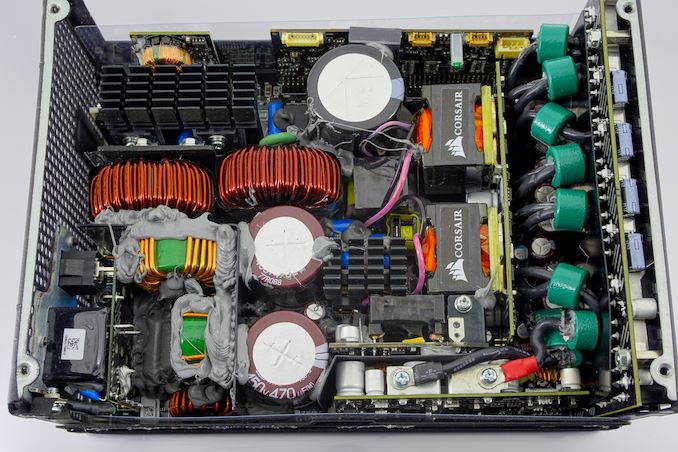
Now that you've picked out your CPU, it's time to start picking out the rest of your system components. And perhaps the most humble but overlooked of these components is the power supply unit (PSU). Available in a wide range of sizes and power capacities, there are a number of great PSUs out there, but choosing between them can be a challenge. So today we're bringing you our annual PC power supply guide, to help you sort figure out what the best options are, be it a low-wattage unit for a small form factor PC, or a hulking kilowatt unit for the most powerful PC.


from AnandTech https://ift.tt/THIX1OG
via IFTTT

Tuesday, 21 November 2023

AMD's 96-Core Ryzen Threadripper Pro 7995WX Hits 6.0 GHz on All Cores with LN2

https://ift.tt/ZUAreBG

AMD's top-of-the-line Ryzen Threadripper Pro 7995WX is a unique workstation-grade processor that not only offers unbeatable performance in programs that can take advantage of all of its 96-core might, but it also supports overclockability. As it turns out overclocking potential of the CPU is quite huge as it can hit 4.80 GHz on all cores with air cooling and 6.0 GHz on all cores with liquid nitrogen.

AMD's Ryzen Threadripper Pro 7995WX is a quite formidable processor that packs 96 Zen 4 cores clocked at 2.50 GHz by default (and which can push one core all the way to 5.10 GHz with decent cooling), an eight-channel DDR5 memory subsystem, and 128 usable PCIe 5.0 lanes. But AMD decided to show that the processor can do much better with advanced and extreme cooling. To do so, the company teamed up with Bill 'Sampson' Alverson, an accomplished overclocker from the U.S., who took an Asus Pro WS TRX50-Sage WiFi motherboard, four G.Skill DDR5-6400 CL32 memory (which he set to work at 3200 MT/s CL32 mode), and an Asus Thor 1.5 kW power supply.

At first, Sampson tried to overclock AMD's Ryzen Threadripper Pro 7995WX using a giant IceGiant ProSiphon Elite air cooler with four huge fans. He managed to hit 4,791 MHz in Cinebench R23 and 4,875 MHz in Cinebench R15. Then, he took a custom liquid cooling system and pushed the 96-core CPU to 4,966 MHz in Cinebench R23; 5,000 MHz in Cinebench R15; and a whopping 5,265 MHz in GPUPI 1B for CPU.

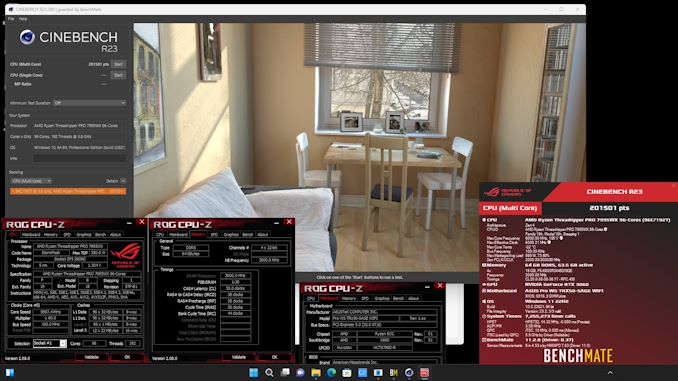
But the most interesting part is of course usage of liquid nitrogen cooling as −196°C (− 320 °F) certainly removes most of thermal constraints. The results are quite impressive: Sampson has managed to push AMD's Ryzen Threadripper Pro 7995WX all the way to 5,550 MHz with LN2 cooling, which is over 584 MHz higher compared to his result with custom liquid cooling. The CPU scored 186,756 points in Cinebench R23, up from 100,000 points for the CPU at default clocks. The processor consumed 980W at such an extreme frequency, which is up dramatically from its 350W TDP. Meanwhile Elmor and Der8auer have managed to overclock his Ryzen Threadripper Pro 7995WX to 6.0 GHz wih LN2 and scored 201,501 points in Cinebench R23.

Meanwhile, to somewhat simplify overclocking botg overlockers had to reduce the number of memory modules to two and lowered its data transfer rate to 3,000 MT/s, which somewhat reduced the value of such overclocking (after all, nobody uses this CPU with only two memory modules). Meanwhile, considering the fact that AMD wanted to achieve the maximum clock possible for its 96-core processor, playing with memory configuration is a fair thing to do.


from AnandTech https://ift.tt/mf2Xev9
via IFTTT

Monday, 13 November 2023

AMD Ryzen 8000 CPUs could be revealed at CES 2024 – but not the chips you think

https://ift.tt/ZLAvlVd

Gigabyte just told us that AMD’s next-gen APUs for the desktop will be out later in January.

A press release from the motherboard maker was published over the weekend for its new beta BIOS release for AM5 (the chipset for current-gen Ryzen 7000 processors).

That release mentions the incoming desktop APUs specifically, saying: “The forthcoming AM5 next gen APU will be launched at the end of January 2024.”

If true, with CES 2024 happening at the start of January, we’d expect AMD to hold an initial reveal at this event.

These processors are purportedly Ryzen 8000G models, as previous chatter from the grapevine has indicated. Note the ‘G’ which means they are APUs with relatively powerful graphics (for an on-board solution) intended to be used in desktops so a discrete GPU isn’t needed (saving money).

In theory – as reported by HKEPC previously – the top-end Ryzen 8000G model will extend to eight cores (16-threads) and will offer integrated RDNA 3 graphics with 12 compute units.

Purportedly there’ll be four chips in the line-up, all based on Zen 4 architecture (but also incorporating more compact Zen 4c cores in a hybrid design).

Speaking of saving money on GPUs, another option, of course, is to keep an eye out on the bargains incoming for Black Friday.


Analysis: Pepping up the graphics

While Ryzen 8000 has been previously mentioned a lot in the context of Zen 5 processors – the next generation to succeed Ryzen 7000 – as noted, these ‘G’ suffixed APUs are rather different in their focus on providing an all-in-one desktop solution (dispensing with the need for a separate GPU).

The Ryzen 8000G models have been given considerably more pep (in theory) thanks to more powerful integrated graphics, with the shift to RDNA 3 being a big step up.

Now, while we say that, don’t think that these chips will work for serious gaming needs – but they’ll be fine for more casual gamers, delivering palatable enough 1080p performance in general. Demanding gaming will still require one of the models at the top of the tree in our best processors roundup.

The successor to the current-gen Ryzen 7000 processors, based on Zen 5, are going to turn up a bit later next year – we’re not sure when, but probably mid-year, most likely – and they may be called Ryzen 9000 models to differentiate them. That’s the latest rumor anyway.

Via PC Gamer

You might also like


from TechRadar: computing components news https://ift.tt/PlZRx3k
via IFTTT

Friday, 10 November 2023

Report shows Intel’s 14th-gen CPUs are great overclockers – and suggests which 14900K variant you should buy

https://ift.tt/YpznbqD

Intel’s new Raptor Lake Refresh CPUs have been under scrutiny in a new report which evaluated a host of silicon from the 14th-gen range.

This comes from Igor’s Lab – a German site which has previously conducted similar tests – and involved some 600 of Intel’s processors, both 14th-gen and 13th-gen for comparison. All these chips were split up among five intrepid overclockers for testing (one of those being Igor).

Given the vast number of CPUs being covered, the testing employed was necessarily limited, with the processors placed in an Asus Maximus Z790 Hero motherboard, and Silicon Prediction (SP) values recorded (indicating the quality of the chip essentially).

Furthermore, the voltage drawn was measured when at the maximum rated Turbo clock speed (with a lower voltage meaning the chip is better quality – as there’s more headroom to crank up the voltage for a bigger overclock).

There’s a mountain of results to wade through, as you can imagine, so we’ll pick out some brief highlights.

The overall conclusion is that Raptor Lake Refresh processors are better binned (of a higher silicon quality) compared to their predecessors, Raptor Lake chips, but then you’d expect that really (given generational process and manufacturing refinements).

For example, looking at maximum voltages, the 14900K needed as low as 1398mV in four cases to hit full Turbo, and the lowest the 13900KS managed was 1433mV (25 of the 14900K CPUS were below that value, in fact). This shows that with specs otherwise identical, the 14900K is a superior piece of silicon overall (though there will be variances, and it’s important to note the 13900KS sample size is much smaller here, which could have an impact).

As mentioned, with more headroom to allow voltage to be pushed in general, Raptor Lake Refresh is giving overclockers more scope for juicing up clock speeds that little bit more.

Another interesting point is that the report compares the standard 14900K against the 14900KF version (which is the same, but lacks integrated graphics). Was there any marked difference in the two spins on the flagship?

The 14900KF chips had a spread of SP values ranging from 90 to 104, whereas the 14900K was between 92 and 112, indicating a higher quality for the latter.

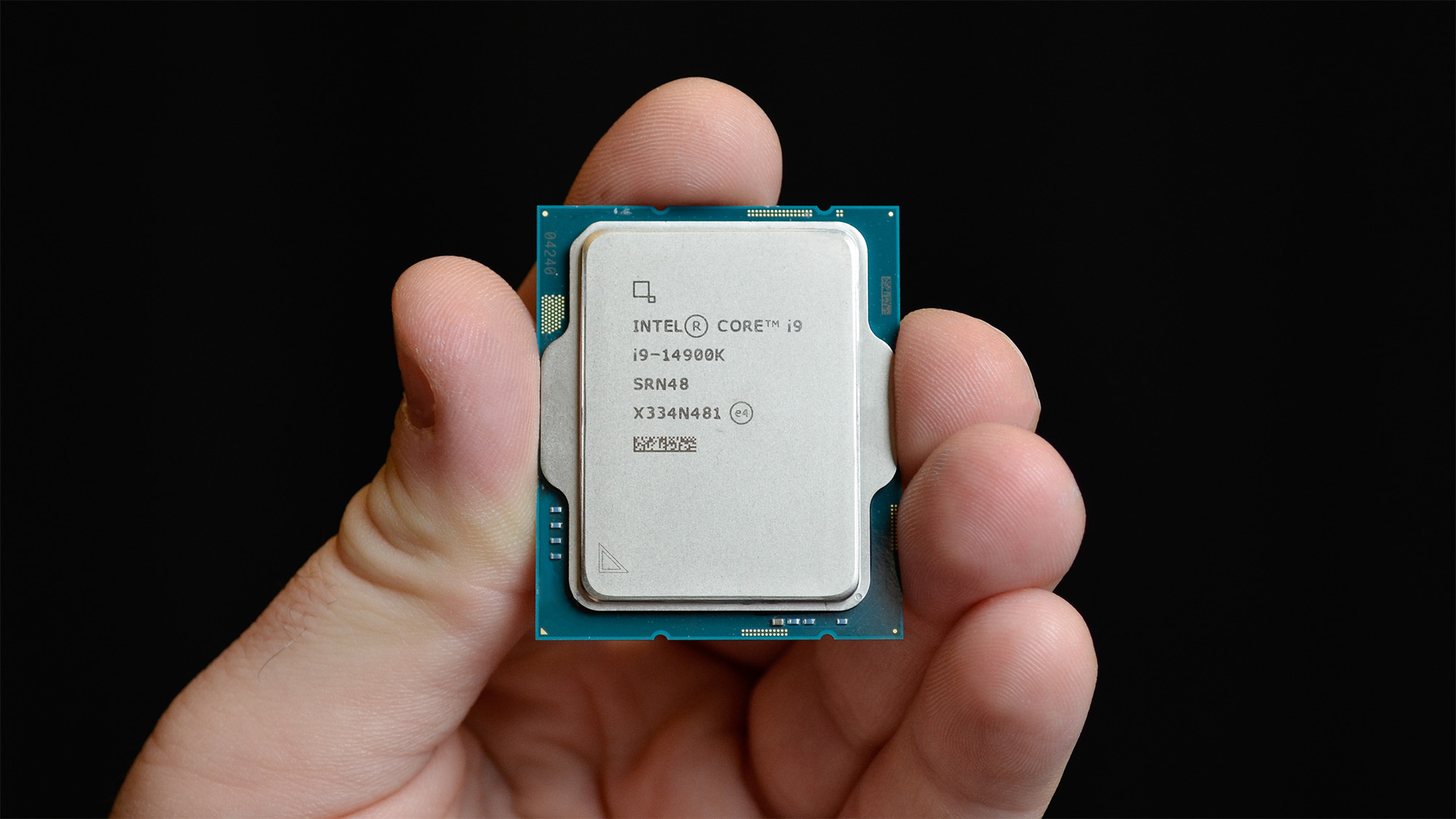
A masculine hand holding an Intel Core i9-14900K

(Image credit: Future / John Loeffler)

Analysis: No alarms and no surprises…

Looking at those last SP scores, the 14900K looks a better proposition, but we have to remember that even a sample of 600 processors hardly tells a definitive story, whether that’s pertaining to individual head-to-head CPU performances, or the overall picture.

That said, as noted it’s not surprising to see Raptor Lake Refresh is better binned than the previous-gen Raptor Lake chips, and indeed that the new CPUs overclock better. If you recall, it was even the case that long before the 14th-gen processors emerged there were leaks indicating that Raptor Lake Refresh was going to be a solid step forward on the overclocking front.

So really, there are no big surprises here, but the result of that 14900K versus 14900KF battle is interesting to see.

Still, any Raptor Lake Refresh buying decision will be based on how much of an upgrade it’ll be from what you’re currently running, and the performance improvements for the 14900K aren’t impressive gen-on-gen as we pointed out in our full review.

If you’re intending to overclock, though, there is definitely a bit more mileage in this new generation of Intel silicon, and the report certainly makes this clear (just make sure you get yourself a top-notch CPU cooler).

Via VideoCardz

You might also like


from TechRadar: computing components news https://ift.tt/vnzCqSs
via IFTTT

Is AMD close to revealing new Ryzen 9000 CPUs? We doubt it

https://ift.tt/08oTE5W

We’ve caught a glimpse of AMD’s Ryzen 9000 range, or at least a mention of it, purportedly in an Alienware advert.

Tom’s Hardware brought our attention to the leaked image which shows an Alienware desktop PC with text indicating that it has an ‘AMD Ryzen 9000 Series’ chip inside.

See more

Predictably, some folks have been pretty quick to jump to the conclusion that this means next-gen Zen 5 chips called Ryzen 9000 are coming, and maybe sooner than expected. And that AMD will skip over the Ryzen 8000 name (sort of – we’ll come back to that later).

However, we must be very skeptical about the image for a number of reasons, not the least of which is that it comes from the Chiphell forums (not the most reliable source in our experience).

So next up, let’s mull over the other reasons to approach this one with caution, and decide exactly how much weight we can give this apparent leak.


Analysis: Fake or mistake? Or could it be real?

The first thought that may occur to you is that this is a fake – that was certainly the case for us. As mentioned, Chiphell isn’t our favorite trusted source by any means, and there’s something about the ad that feels a bit off.

Alternatively, it could be a genuine piece of Alienware marketing which someone has blighted with a typo, so it shouldn’t read ‘Ryzen 9000’ at all. It wouldn’t be the first time something like this has happened.

For a moment, let’s put those two obvious concerns aside and assume that it’s authentic. Isn’t it simply too early for next-gen Ryzen 9000 CPUs to be even floating around in early work for ads? And wouldn’t it be Ryzen 8000, anyway?

On the second point, well, AMD could be reserving Ryzen 8000 for APUs and skipping it for desktops, moving straight to Ryzen 9000 with the latter. This happened with Ryzen 6000, which was APUs, where desktop CPUs went from the 5000 Series to 7000, so it’s not without precedent. Some might say it’s even quite likely.

As to whether it’s just too early to be seeing anything on next-gen Zen 5, yes, there’s some merit to that line of thinking we’d say. From the balance of rumors we’ve heard in the latter part of this year, Zen 5 is likely to debut around the middle of 2024. However, some chatter has indicated the CPUs could come earlier next year. And if we run with that idea, this leak could herald an AMD announcement of Ryzen 9000 CPUs at CES 2024, with a launch of these challengers for our best processors roundup happening a couple of months later.

That said, we haven’t witnessed much in the way of leakage around Zen 5 chips – what we have seen has been pretty lightweight spillage – so that leads us to believe it’s a real reach to assume they’re near being revealed. All in all, we’re not convinced by this leaked pic, and we’d advise staying on the skeptical side for sure – but it may well be correct that Zen 5 desktop turns out to be Ryzen 9000.

You might also like


from TechRadar: computing components news https://ift.tt/VR5v9Yl
via IFTTT

Thursday, 9 November 2023

Micron Introduces 128 GB DDR5-8000 RDIMMs with Monolithic 32 Gb Dice

https://ift.tt/htVeAoa

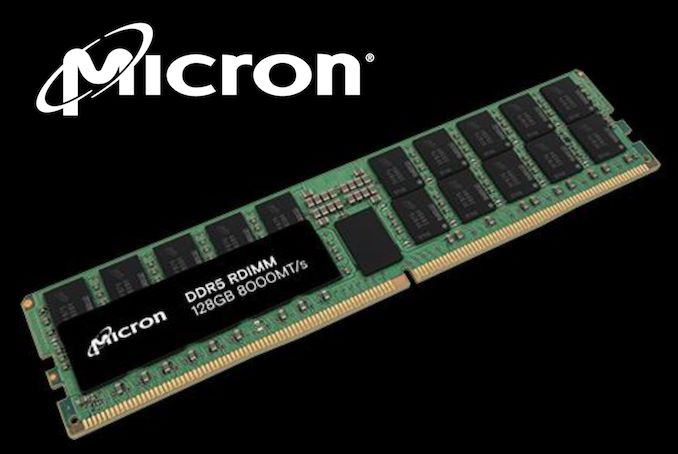
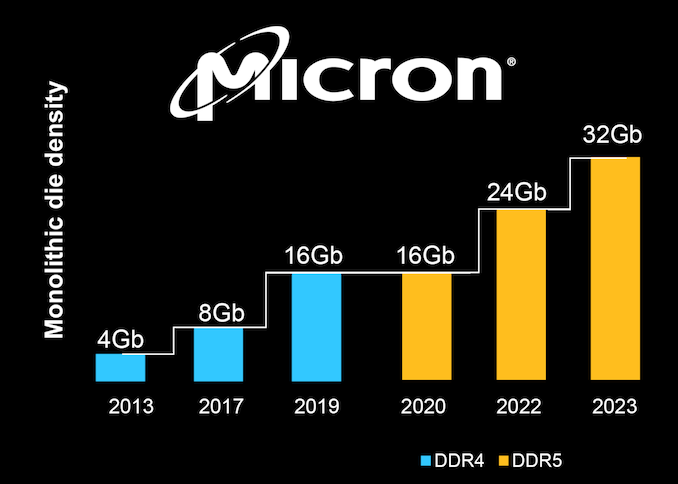
The path to high-capacity RDIMMs for servers has primarily been through 3D stacking (3DS) of DRAM dice using Through-Silicon Vias (TSVs). However, this has presented significant challenges in packaging (driving up the cost), and has also not been efficient in terms of energy consumption. The demand for large memory capacity RDIMMs is being primarily driven by the sudden emergence of large-language models (LLMs) for generative AI and increasing CPU core counts. Both of these require significant amount of DRAM to keep pace with performance requirements. Keeping these in mind, Micron is introducing 128 GB DDR5 RDIMMs capable of operating at up to 8000 MT/s today, with mass-production slated for 2024.

Micron has recently started fabricating 32 Gb monolithic DDR5 dice using its proven and mature 1β technology. The new dice have a 45%+ increase in bit density, and are capable of reaching up to 8000 MT/s while also operating with much more aggressive timing latencies compared to the standard JEDEC specs. The company is claiming that it improves energy efficiency by as much as 24% compared to the competition's 3DS TSV offerings, and the faster operation can also help in faster AI training times. Avoiding 3DS TSV allows Micron to optimize the data input buffers and critical I/O circuits better, while also reducing the pin capacitance on the data lines. These contribute to the reduced power and improved speeds.

Micron has been doubling its monolithic die density every 3 years or so, thanks to advancements in CMOS process as well as improvements in array efficiency. The company sees a clear path to 48 Gb and 64 Gb monolithic dice in the future with continued technological progress. Micron is also claiming that its 1β node has reached mass production ahead of the competition, and that it has had the fastest yield maturity in the company's history. Dual-die packages and tall form-factor (TFF) modules using 1β DRAM are expected to enable 1TB modules in the near future.

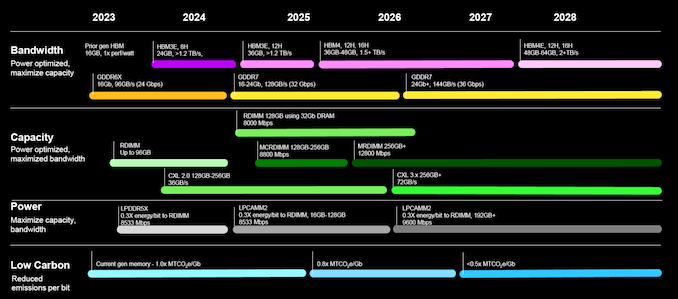
Along with the announcement of the 128 GB RDIMMs using 1β technology, the company also laid out its roadmap for upcoming products. HDM and GDDR7 are expected to dominate bandwidth-hungry applications, while RDIMMs, MCRDIMMs, and CXL solutions are in the pipeline for systems requiring massive capacity. LPDDR5X, and LPCAMM2 solutions going up to 192 GB are expected to make an appearance in power-sensitive systems as early as 2026.


from AnandTech https://ift.tt/f2vpJPS
via IFTTT
Related Posts Plugin for WordPress, Blogger...