Friday, 7 May 2021

Intel’s Integrated Graphics Mini-Review: Is Rocket Lake Core 11th Gen Competitive?

https://ift.tt/3tqnRL6

In the last few months we have tested the latest x86 integrated graphics options on the desktop from AMD, with some surprising results about how performant a platform with integrated graphics can be. In this review, we’re doing a similar test but with Intel’s latest Rocket Lake Core 11th Gen processors. These processors feature Intel’s Xe-LP graphics, which were touted as ‘next-generation’ when they launched with Intel’s mobile-focused Tiger Lake platform. However, the version implemented on Rocket Lake has fewer graphics units, slower memory, but a nice healthy power budget to maximize. Lo, Intel set forth for battle.


from AnandTech https://ift.tt/3nTOU0a
via IFTTT

Thursday, 6 May 2021

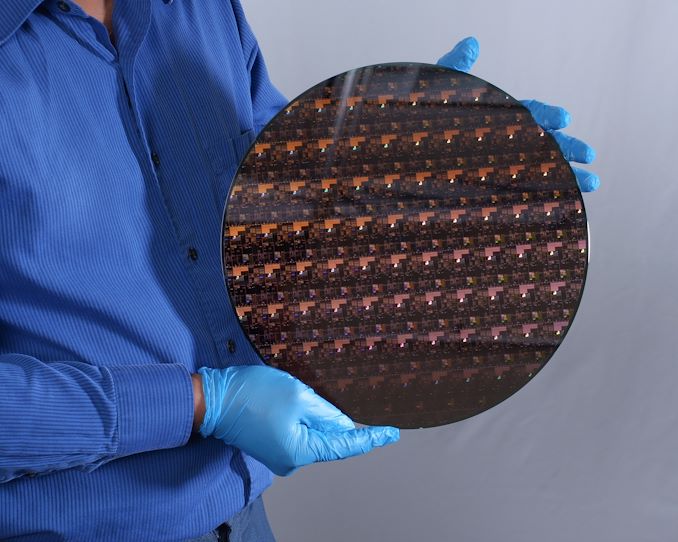
IBM Creates First 2nm Chip

https://ift.tt/3f1gOTI

Every decade is the decade that tests the limits of Moore’s Law, and this decade is no different. With the arrival of Extreme Ultra Violet (EUV) technology, the intricacies of multipatterning techniques developed on previous technology nodes can now be applied with the finer resolution that EUV provides. That, along with other more technical improvements, can lead to a decrease in transistor size, enabling the future of semiconductors. To that end, Today IBM is announcing it has created the world’s first 2 nanometer node chip.


from AnandTech https://ift.tt/33hPXgQ
via IFTTT

Wednesday, 5 May 2021

GlobalFoundries Upgrades for Silicon Photonics in Quantum Computers

https://ift.tt/33grsk3

One of the targets of the modern foundry business is to have a wide array of manufacturing process technologies. This enables it to cater to as many customers as possible. That includes logic, embedded memory, radio frequency, analog, high voltage, long life cycle, and now silicon photonics. As part of a partnership between GlobalFoundries and PsiQuantum announced today, new proprietary manufacturing tools have been installed into GlobalFoundries' most advanced facility in Malta, New York. This will enable GF to build silicon photonics to enable what could be a 1 million+ qubit quantum computer from PsiQuantum.


from AnandTech https://ift.tt/3nQUxMl
via IFTTT

Tuesday, 4 May 2021

Intel EMEA To Partners: Not Invulnerable to Substrate Shortages through 2021

https://ift.tt/3tgnliz

As part of Intel’s Partner Connect conference last month, AnandTech has learned that information has been provided to European, Middle East and Asia (EMEA) customers and partners regarding the current level of semiconductor supply through the rest of the year. Intel works closely with its key distributors and customers in each region to ensure that they have sufficient support to effectively sell to their customers, however the recent high demand for semiconductors has put additional strain on Intel’s ecosystem, perhaps more so than the high demand period for server processors a couple of years ago. In a discussion session led by Intel’s GM for EMEA, Maurits Tichelman, it was highlighted that May was set to be a testing time for distribution, with the rest of the year still subject to market forces. It was also mentioned that despite Intel’s decades of experience with demand surges, it is not invulnerable to substrate shortages.


from AnandTech https://ift.tt/3gXcDeo
via IFTTT

Intel’s Chief Revenue Officer: We have Silicon, but Shortages in Wi-Fi, Substrates, Panels

https://ift.tt/3vCXhji

One of the key commentaries about the current semiconductor shortages is around where exactly the bottlenecks are. The traditional interpretation of a semiconductor shortage implies that not enough silicon can be made, but over the last few months a number of companies have pointed to post-silicon production, such as testing and packaging, causing some of the issues. To the best of our knowledge, none of the companies affected by the shortages are specifically pointing at partner companies or specific supply chain areas where there is a bottleneck, however there have been a number of comments focused in the direction of packaging, substrates, and the specialist films involved for high performance compute.

AnandTech has learned that at its Partner Connect 2021 event recently, Intel Chief Revenue Officer Michelle Johnston Holthaus expanded the dimensions to which the supply chain is causing the semiconductor shortage. During the event Keynote, as part of a planned Q&A session with the host John Kalvin (Intel GM of Scale and Partner Organization), Holthaus expanded on the commentary surrounding Intel’s silicon flow and where the supply chain bottlenecks are for Intel and associated partners.


from AnandTech https://ift.tt/3ucNgch
via IFTTT

Monday, 3 May 2021

Intel to Invest $3.5 Billion USD into Foveros and EMIB Production in Rio Rancho

https://ift.tt/3aZUGb9

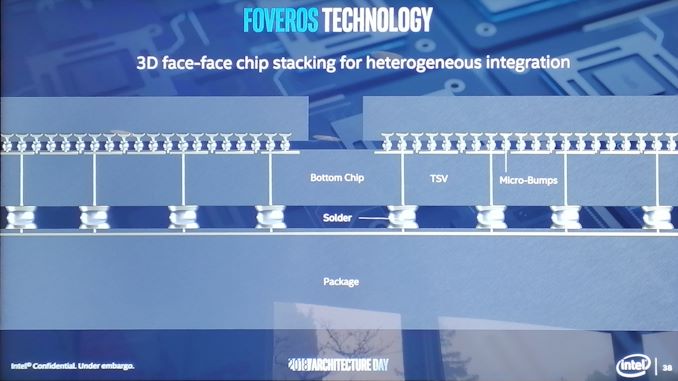
At a news conference today, Intel has announced that its Rio Rancho campus in New Mexico will be getting an investment of $3.5 billion USD for an expansion of its current state-of-the-art facilities for the company to roll out its new Foveros packaging technology in volume for its own products as well as its customers. This comes on top of the $20 billion USD that Intel has committed to two new fabrication plants in its Ocotillo campus in Arizona for wafer production. In partnership with New Mexico state and local government, the new investment is expected to provide 1000 construction jobs over three years, 700 permanent technical positions at the company, and 3500 ancillary positions in the area when the facility is fully functional.


from AnandTech https://ift.tt/2QII5CA
via IFTTT

Sunday, 2 May 2021

AMD Ryzen 6000 CPUs not coming in 2021, more rumors claim – we could see 5000 XT chips instead

https://ift.tt/eA8V8J

Earlier this week, we heard a rumor that Ryzen 6000 processors based on Zen 3+ won’t be coming in 2021, and there’s now been a further flurry of speculation that AMD will instead be relying on Ryzen 5000 XT CPUs to provide buyers with new options later this year.

The original source for this that we reported on was YouTube leaker RedGamingTech, but now a whole bunch of folks seem to be on board the rumor bandwagon in this case, including fellow YouTuber Moore’s Law is Dead, who highlighted some other rumors on Twitter, as did Wccftech which spotted all this, including the following tweet from ExecutableFix.

See more

The gist of all this recent spinning from the rumor mill is that Ryzen 6000 CPUs codenamed ‘Warhol’, based on Zen 3+ (a refinement of the current Zen 3 architecture for Ryzen 5000 processors), have disappeared off AMD’s recent roadmap for 2021, and no one is hearing about them anymore – so the theory is they’ve been canceled. Instead, Ryzen 6000 is supposedly now arriving in 2022 as Zen 4 chips.

Remember that it is just a theory, and even the rumor mill underlines this, but what the fresh speculation does is point to an alternative, in that rather than leaving a big hole in Team Red’s line-up for 2021, AMD is planning on releasing 5000 XT versions of current processors (which as you’ll no doubt recall, has been done before with XT chips for the Ryzen 3000 range).

APU only?

Moore’s Law is Dead further points out the possibility that in fact, ‘Warhol’ may refer solely to next-gen APUs built on an enhanced version of Zen 3 (not Zen 3+), stating that several of his sources at AMD have said that they haven’t heard a Zen 3+ refresh for Ryzen desktop CPUs is in the cards at all (and indeed running with Zen 3+ was never actually AMD’s plan, anyway).

There are somewhat mixed messages around the rumors about Zen 3+, then, but the overall gist is that it doesn’t seem likely there will be a Zen 3+ refresh in the form of Ryzen 6000 this year, and instead we’ll get Ryzen 5000 XT models – still a refresh, but a more minor one.

That said, the previous rumor indicated that the gains from Zen 3+ weren’t huge anyway (but still obviously more than an XT refresh would be).

According to Moore’s Law is Dead, we may also still see ‘Warhol’ emerge in the form of a new APU, but he sounds pretty doubtful about that, even, and as ExectuableFix points out in the above tweet, AMD ‘Phoenix’ – Ryzen 7000 APUs (Zen 4) – have already been spotted in other rumors, with no sign of ‘Warhol’ now.


from TechRadar: computing components news https://ift.tt/339ruKs
via IFTTT
Related Posts Plugin for WordPress, Blogger...